31 December 2008

What is Normal? Dog Vital Signs


What Is Normal?
As dog owners, we can usually tell if something is wrong with our companions by the symptoms we observe. Vomiting and diarrhea are pretty obvious signals that the gastro-intestinal system is off. Other signs that something is wrong are coughing, watery or mucousy (gooey) eyes and nose are signals that something is wrong. Loss of appetite and listlessness or sudden behavioral changes are warning signs that something is not right with our companions.

As good dog owners, we need to be aware of normal and not so normal life signs so we can better know what our companions need. The following is a brief list that can help you measure your dog's vital signs. As always, if you have any questions, contact your veterinarian immediately.

Temperature:
Normal temperature in adult dogs is between 101-102.5 degrees. Should you want to take your dog's temperature using a rectal thermometer, it is fairly simple. Be sure the thermometer starts below 97 degrees and lubricate the tip with Vaseline. You want to insert the thermometer into the dog's anus to a depth that is appropriate for the size of your dog. For small dogs, an inch is probably sufficient. For larger dogs, you may need to insert as much as half the thermometer. You will want your dog in a standing position, hold the end of the thermometer in your free hand and keep it inserted for about two to three minutes to get an accurate reading. For those of you that prefer a simpler method, you can get a thermometer that measures temperature from contact with the skin. If you use this method, hold the flat thermometer against your dogs abdomen where there is the least amount of hair until you get a steady reading.

Respiration:
A resting dog breathes about 10-30 times per minute. After excitement, heat, exercise or extreme stress the respiratory rate increases. While at rest, you can count respiration as the dog breathes through his nose by watching the chest move in a smooth, rhythmic motion. You should also count respiration after your dog exercises so you know what normal looks like. Changes in rate or style of respiration of your resting dog may indicate disease.

Heart:
Normal heart beat rate for dogs ranges from 80-140 beats per minute. Small dogs and pups usually have a more rapid heart rate or pulse rate than larger dogs. A normal pulse is steady and firm. You can check your dogs pulse rate by placing your fingertips or palm against the dog's chest just behind the point of the elbow or you can place your middle and index fingers at the middle of the inside surface of the rear leg near the point where the leg meets the body. This is the area the femoral artery passes close to skin. Your dog's heart rate and pulse rate should be the same. To count the pulse, either count the beats for one minute or if you like math, count for 15 seconds and multiply by four.

Capillaries:
Capillaries are the small blood vessels that carry blood to the skin. Capillary Refill Time (CRT) is the measure of capillary circulation. Normal CRT is one second or less. To check this, press one finger firmly against your dog's gums. When you lift the finger you will see a pale area which should refill with blood almost instantly with the gums returning to the normal color. Dogs in shock will have poor capillary refill time.

Abdomen:
Without Ray vision, you won't be able to see what is going on inside your dog's digestive tract, but you can still monitor appearance to help you know what is normal for your dog. Know how your dog looks and sounds on a normal day. How wide is your dog behind the ribcage before and after eating. The abdomen should be soft to the touch and shouldn't have a hollow sound when tapped. It also should not have constant audible gurgling sounds. Dogs with a distended abdomen or with a hollow sound like a drum or with a very active gastric tract may be in distress with enteritis or bloat.

Urinary Tract:
Healthy dogs have urine that is clear yellow in color. The color will increase as the amount of water excreted decreases and the color will pale as the amount of water excreted increases. Cloudy or bloody urine is not normal and is cause for contacting your veterinarian. Normal urine volume ranges from 12-20 milliliters per pound per day. The average water consumption is 30 milliliters (a little more than one ounce) per pound per day. A sudden increase in water consumption or urine volume may be an indication of disease.

Teeth:
Puppies usually have 28 baby teeth, also called deciduous teeth. Puppies do not have molars and all baby teeth should be in place by six weeks. Adult dogs have an average of 42 permanent teeth which usually start to arrive at 4-5 months and are all in place by 6-7 months. Larger breed dogs tend to have teeth erupting more quickly than smaller breed dogs. Gums are pink and teeth are white in normal dogs. (Some dogs do have black gums and that is normal. Again, know your own dog.) There should be no swelling or bleeding of the gums once all the teeth are in. Be sure to brush your dog's teeth to reduce tartar buildup and keep a healthy mouth.


This should get you started on what is normal for your companion. For more detailed information, you can always talk to your veterinarian about basic health care.


Want assistance training your dog? Contact me.

30 December 2008

Dog - Preventing Puppy Biting and Nipping


Your puppy bites and nips with those needle sharp, vampire-like teeth in order to learn more about their environment. They have been practicing this skill with their litter mates since they were born and they don't understand that humans are not as durable as their fur coated family members. Pups need to learn to inhibit their bite and to be gentle with humans and eventually to not place their teeth on us at all.

Over the years, lots of people have received the advice to flip their pup on his back every time their puppy bites. This is called an alpha roll and was quite popular in the 1970's, but for most people, this is not an effective training tool. Many dogs will react badly to the alpha roll by becoming more aggressive because they now see their humans as being unpredictable, frightening and possibly even as threatening their very existence. Fortunately, there are alternatives to the alpha roll that will help your pup to learn how to have a soft mouth.

If you pup puts his mouth on you in a gentle manner, ignore it. You can teach him that teeth aren't allowed on human skin. What you are teaching now is that any bite contact should be soft. If you are petting pup and you get a bite that hurts, respond in a higher pitched voice with "Ouch" and walk away. If pup follows and continues to bite, you will want to tether pup to a solid object so you can move out of range. Wait 30 to 60 seconds and then interact in a calm fashion with your pup. If you get another hard bite, say "Ouch" and walk away. You are teaching pup that this behavior makes you go away and your clever pup will begin to understand this very quickly.

Every time pup bites hard, say "Ouch" and walk away. If pup mouths you gently, say "Good" and reward with a treat and keep on paying attention or playing with pup. You pup will quickly figure out that being gentle brings treats and continued interaction with you. This method uses the language your dog understands -- pup's littermates cease playing when the bites get too hard, and you are now speaking that same language. Puppies learn a soft mouth from their littermates, and they need 8 weeks with their dog family to understand soft mouth and proper interaction.

Once your puppy has learned the basics of gently mouthing, you can require softer and softer contact to keep playing and interacting with you until there is no mouthing allowed. Once you have taught your puppy that teeth are not acceptable, you will have effectively conditioned pup with good bite inhibition.

Basic Tips

When playing with your puppy, have a soft chew toy available to offer before pup puts teeth on your hand.


If your puppy bites when you are petting, give treats with one hand while petting with the other hand.


Plan your petting sessions when your pup is tired. A tired puppy is a good puppy.


Don't play games that involve face grabbing or pushing pup's head as these encourage biting.


Always supervise puppies and children. Children often do things wrong when a puppy bites like screaming, jumping and running -- all of which encourage inappropriate puppy behavior.


Want help training your dog? Contact me.


29 December 2008

New Puppy or New Dog Shopping List

My Students from the Northwoods Boxer Club held at Mud Puppies in Champlin, Hennepin, Minnesota.


CRATE (kennel or cage): Buy the size that will fit your dog when full grown. There are collapsible wire types or the enclosed molded plastic. Both types will work. Your puppy needs enough room to stand up, turn around and lie down. If you have a large breed puppy, block off the extra space so your house training goes more quickly.


PUPPY GATE: Very useful for confining a not yet house trained puppy to one room. These are the same as baby gates for human children.


COLLAR: Nylon or leather buckle collar. There are adjustable ones that grow with your puppy and will last longer. Expect to buy more than one during your dogs growth stage. Puppies do not need any type of training collar (choke chain) or pinch collar. Head collars when used correctly give you humane and effective control over your dog.


LEASH: Six foot leather, they last several lifetimes. (Keep this away from pup's teeth since it will seem like a great chew toy.) Chain is not recommended. A 10 foot training line is also recommend for in and out of the house. If your puppy wants to chew leashes and collars, spray them with something like Bitter Apple.


FOOD/WATER DISHES: Buy one for water and one for food. Stainless steel is the best and lasts the longest. There is less likelihood of your pet having any reactions to these bowls and they are really easy to keep clean. Plastic dishes can give your puppy "pimples" on their chin. This is a reaction to the plastic and if your dog is "breaking out" be sure to change to stainless or crock bowls.

FOOD: Obtain a small amount from your breeder to start. If you are changing brands, you will have some to mix in with your new formula and this should help you avoid an upset puppy stomach. You will want to feed a premium or super premium food. More on Nutrition.

FOOD TREATS: Avoid all highly colored treats. The dyes can cause hyperactivity and skin problems in susceptible dogs. There are many natural treats available on the market. Remember to read the labels to be certain you are feeding a high quality treat.

TOYS: You want to get chew toys you can stuff with goodies; kibble, treats. The best on the market are the KONG toys they come in many shapes and different sizes. Red colored are for normal chewers and Black are for dogs who are extra hard chewers. Nylabones are great for chewing. Some dogs do well with the sterilized bones available at your local pet supply retailer. These are all safe toys. Rawhide bones are good but owners should make sure there are no knots for dog to chew off and swallow. If you really want to use rawhide, avoid bleached bones and select the pressed rawhide style to reduce the risk of choking. Always supervise when chewing rawhides.

BRUSH/COMB: Suitable for your dog's coat. Ask your breeder or a dog groomer about the correct type. Also select a toenail clipper to keep pup's nails nice and manicured.


TRAINING: Check into types of training classes available and when they start. BOOKS: There are many excellent dog training books available. Check web sites like Dogwise and SitStay for a good variety. Your local library is another excellent source for reading materials.


TIME: Time and patience are important when you are welcoming a puppy into your home. Remember, pup doesn't know what you expect from him in the beginning, and he is learning a new language.


Need help training your dog? Contact me.


28 December 2008

Senior Scoop


It seems like only yesterday that your pup literally ran circles around you when you went for walks, with lots energy to spare. Now your dog has a hard time making it up the stairs, and the vision and hearing aren't as good as they once were either. Sometimes she gets confused, yet the veterinarian tells you there is nothing seriously wrong with her; she's just getting older. Dogs age, just as humans do -- only more quickly. If your pet seems to be slowing down, here are some things you can do to help.


  1. Watch your pet carefully, keeping track of where she is in the house. She may need assistance finding her way around.

  2. Watch with particular care as she climbs up or down the stairs, and help your pet if needed. If she is small and you are strong enough, you may need to carry her up and down the stairs.

  3. If you also have a younger dogs(s), walk the older animal separately from the youngsters so the older dog can go at a slower pace instead of struggling to keep up with the others.

  4. Make sure your dog is eating properly. A good super premium senior food is an excellent choice for the geriatric dog. Don't give her hard bones to chew on; she may not be able to handle them.

  5. Never let her roam loose outdoors. When she is outside the confines of your fenced yard she may easily become lost or become the target of a more aggressive animal.


Want behavior or training assistance? Contact me.

Potty Training Basics


Going to the bathroom in the house is one of the biggest issues for new puppy owners. You can easily win the battle if you are consistent, patient, use supervision, utilize confinement and reward your pup with scrumptious treats. Remember, you are teaching your puppy where to relieve him or herself rather than where not to relieve him or herself.


One of your first steps is to choose a place that you want your pup to eliminate. Once you have chosen the spot, always take your pup on leash to the spot and stand there for three to five minutes. If you don't have success, take pup back inside and place them in their crate. When you are home, make this trip every hour or two and praise success with voice and treats to expedite the learning process. You pup will quickly learn that elimination bring tasty rewards.

Use a Crate. Most dogs love their "den" as long as it is the right size. If it is too big, part of it will become a bathroom. If it is too small, it is uncomfortable. Your pup should have enough room to stand up, turn around and lay down. When pup is in the crate, provide a food stuffed chew toy like a Kong so pup has something to occupy the confinement time. The crate should help you predict when the pup needs to "go" so you can teach pup where and why it needs to eliminate outdoors.

Outside Time: Puppies need to relieve themselves frequently. Ideally, your pup should go outside every two hours.

Same Time, Same Place: Take pup out on a six-foot leash and stand in the place you want pup to "go." Praise pup for "going" in the right location.

Boo Boo? Show pup his mistake and let him know he was wrong with a firm "No!" Take pup outside and show him how you want it done. (Not literally!)

Don't rub pup's nose in "it" unless you want him to eat "it."

Don't smack him with a rolled up newspaper unless you want him to eat it. If you want to hit something with a newspaper, roll it up and hit yourself for not paying more attention to pup's needs.

Feed to Succeed: A high quality, nutritional, highly digestible diet keeps odors, waste and trips outside to a minimum.

Take pup out:

  • After eating
  • After napping
  • After a play session
  • First thing in the morning
  • Last thing at night
  • When his eyes are crossed

The biggest key to house training success is consistency. The more consistent you are with pup, the quicker pup will give you the desired response. When pup relieves himself outside, pup earns more free time inside your home. One quick method is alternating freedom and confinement. On a basic level the following guidelines will help you train your puppy:

  • Follow the house-training schedule strictly. If pup has an accident you have allowed too much freedom.
  • While standing in one spot with pup on a leash, allow two minutes for relieving himself. Reward immediately (within one second) with a treat or praise after the desired behavior.
  • Holding "it" all night is the first stage to successful housebreaking.

If your puppy whines and cries at night, please try to ignore the commotion and go back to sleep. (This applies unless pup is hurting itself.) If you get up even to reprimand pup for making noise, you have just shown your pup that you will get up at night. Occasionally dogs must relieve themselves at night, and ignoring will lead to a big mess in the morning. You can respond to the pup's warning by allowing pup out for only two minutes.

For an easy routine to assist in quickly training your pup to "go outside" and avoid most accidents, follow this simple schedule:

  • In the morning, carry your pup outside and place it on the ground (attached to your leash) that you have designated as the bathroom. Give your command to "go to the bathroom" or "potty" or "tinkle" or some other suitable phrase. Allow two minutes for a response. Gently repeat the command (in a tone of voice like you use with your coworkers) and as soon as pup responds, reward immediately. Remember to bring your reward treat with you no matter how optimistic or pessimistic you feel.
  • If pup fails to respond within the allotted time, carefully take it inside and place it back in the crate until you are dressed and ready to try again.
  • When your pup responds correctly, give lots of praise and of course your scrumptious treat. Giving the treat reinforces the desired behavior.
  • Now pup is going to the bathroom outside and can earn some freedom in your home. The following table shows a suggested daytime schedule.
  • Goes to the bathroom outside - 1/2 hour free time - 1-1/2 hours of confinement
    This routine continues until pup learns to "go" on command and earns your trust. At that time you can allow more freedom then go to the next level.
  • Goes to the bathroom outside - 1 hour free time - 2 hours confinement
    This routine continues until pup is doing well. At that time you can allow more freedom.
  • Goes to the bathroom outside - 2 hours free time - 2 hours confinement

This entire process may take up to six weeks. Follow the basics covered here and DON'T become discouraged. They are only pups once and we should enjoy all aspects of new companion's lives.


If you are looking for indoor potty training products, take a look at these options:
http://www.doggiedivot.com/
http://www.cosmopolitancaninecom/
http://www.patiopark.com/
http://www.ugodog.net/
http://www.wizdog.com/


Need help training your dog? Contact me.

27 December 2008

Puppy SIT


Here are two easy ways to teach your puppy to sit. One involves placing pup in that position with your hands, and the other uses food. Both get the job done, but the tasty incentive may be better for shy or extremely active puppies.
You won't need a training collar for either of these methods, but be sure to use lots of verbal praise. Most dogs learn to sit on command very easily, but you will need to practice until pup learns to associate the command with the action. Remember, pup is learning an entirely new language.
HANDS ON METHOD
1. Begin by sitting or kneeling next to your puppy. Place one hand on the back of his rear legs above the hocks and below the tail. Place your other hand on his chest.

2. As you say his name, tell him to "Sit." Gently push back on his chest with one hand and press or scoop his back legs so he "plops" into the sit. The instant he slips into position, praise him, then let him pop up if he wants to.
TREAT METHOD
1. Stand in front of your puppy and hold a small piece of food in front of his nose. Say his name followed by the command "Sit!"Raise your hand slightly over his head and move it toward the back of his body. As his eyes follow your hand, he will lift his head up and drift into the sit position.
2. Once he is sitting, give him the tidbit and praise him. Use a tidbit that is small and doesn't take a lot of chewing, you want the reward to be quick and easy.Every puppy can learn this simple command. Remember training requires patience, persistence, praise and fun.
Need help training your dog? Contact me?

26 December 2008

Dog and Puppy Questions


Questions to Ask Before You Buy
Ask these questions BEFORE you go see the puppies. Once you are looking at the little darlings, it is very hard to walk away. Know how your puppy has been raised and be certain they have been socialized to people and are living indoors. When you do get you puppy, be sure to take it to your veterinarian right away. You want to make certain your puppy is as healthy as possible. The more you know about you puppy, the better off you will be. Remember, knowledge is power.
ASK THE BREEDER
How many years have you been breeding dogs?
  • How many years breeding this breed of dogs?
  • Is this the only breed of dog you have available?
  • How many litters have you bred?
  • Can you supply a customer or reference list?

  • If the breeder answers truthfully, you should have an idea if these breeders are legitimate or a professional breeder. Pet stores probably won't know these answers because their puppies generally come from a supplier.

    • Do you show your dogs in AKC, UKC, IABCA? Ideally your breeder is showing their dogs for an objective outside opinion.
    • Which dog clubs do you belong to?
    • How many dogs have you bred or owned and what titles have they achieved? (For more information on titles go to UKC or AKC .)
    • Some examples of titles include:
      CH (Champion in conformation)
      CD (Obedience title)
      CDX (Obedience)
      UD (Obedience)
      UDX (Obedience)
      OTCH (Obedience)
      TD (Tracking)
      TDX (Tracking)
      FH (Tracking)
      JH (Hunting)
      SH (Hunting)
      MH( Hunting)
      FC (Hunting)
      ScH I; ScH II, ScH III (Schutzhund)

    Good breeders are usually actively competing or participating with their dogs. Pet store puppies usually do not come from breeders that are working and competing with their dogs.

    ASK ABOUT THE PARENTS

    • What are the AKC or UKC registered names of the Sire (father) and the Dam (mother)? Both parents should have registration papers. When in doubt, check the details with the registering club.
    • Why did you chose to breed these two particular dogs to each other?
    • Are there some particular physical characteristics and personality traits that you are attempting to improve in your breeding line?

    Were these dogs bred because they are excellent examples of the breed with excellent temperaments or because the breeder was looking to make some quick money?


    ASK ABOUT HEALTH

    • Which of the following genetic tests/clearances/certifications did you obtain on the parents?
      OFA (Checks for hip and elbow dysplasia) If their information was sent in, you can check this on the Internet.
      CERF (Checks on eyes)
      Temperament


    ASK ABOUT THE LITTER

    • What is the name and phone number of the veterinarian that has seen and cared for the puppies?
    • At what age will your puppies be ready to go to their new home? (Pups should stay with their mothers for a minimum of 7 weeks, this helps their social development with dog interactions.)
    • What is the price based on? You may hear any of the following responses: Pet Quality, Show Quality, Breeding Quality. If you are told they are show or breeding quality, ask how the breeder has determined this. What is their experience showing dogs? Are there lots of dogs with titles and clean health checks?

    ASK ABOUT THE CONTRACT, GUARANTEE and REGISTRATION PAPERS

    • Does the breeder require that puppies not intended for breeding be spayed or neutered?
    • Do you have your transfer copy of the registration papers? (AKC puppy papers are blue.)
    • Do not pay extra for registration papers, this is a violation of kennel club rules. Notify the registering kennel club if this happens.
    • Is there a money back or replacement puppy guarantee?
    • Do you unconditionally take back any puppy/dog of your breeding? Anytime?
    • Ask specifically what the breeder will do if your puppy is very sick. Will they treat it or euthanize?
    • What conditions must the buyer satisfy?


    This should get you started on the right path to puppy ownership. As with any companion animal, be certain you are ready, willing and able to commit to a lifetime of care. Dogs should not be disposable.

    Need help training your dog? Contact me.

    24 December 2008

    Wordless Wednesday - Saddlebreds and Children


    Puppy and Dog Selection


    Selecting Your New Dog or Puppy - Things That Are Good to Know

    AKC Registered and/or AKC Papers
    The AKC (American Kennel Club) is a registry service, not a guarantee of quality. What registration papers tell you (in theory) is your new puppy or dog is the breed you are buying. That is all the papers mean. Registration papers are not a guarantee of quality or anything else. If the people you are buying your puppy from try and charge you extra for papers, RUN away from this deal. Charging extra for registration papers is against AKC rules. Report anyone trying this to the AKC . There are even some people that sell papers on a black market basis. You can contact AKC to check your papers.

    How papers relate to the "real world." Papers are like the title to your vehicle. The title will tell you what type of vehicle you have, Ford, Dodge, Chevrolet. The title does not tell you it is a good special vehicle or that is worth more than any other vehicle. The title just tells you the vehicle you have is most likely the type that it says it is. Know what questions to ask your breeder about your new dog.


    Color
    Color is simply a genetic code. Is some breeds, diluted coat color can relate to other health issues like allergies and/or skin and coat problems. There are also breeds where color relates to more serious health problems. Study up on the breed you are interested in and know what issues can arise. Know what questions to ask your breeder about your new dog.


    "Special" Ancestors
    Do a little research into your breed. In any breed, many dogs can and do trace back to a common ancestor. Is the dog being touted a dog from recent breed history or are you looking at a name from 50+ years ago. Know what questions to ask your breeder about your new dog.


    Price
    If you look in the paper, you will see many dogs listed in the $100 dollar range. Remember the old saying, "You get what you pay for." These dogs are rarely a great deal.


    Free to Good Home
    This is frightening. Free dogs can end up anywhere. There are "harvesters" that travel around and pick up free puppies, kittens, dogs and cats. They can end up in research laboratories, as bait for dog fighting rings, or as breeders in a puppy mill.


    Dogs as Gifts
    Do not give a pet as a gift!


    Championship Lines
    There should be at least 4 dogs with titles in the first three generations. People that breed and show dogs will be proud to show you the photos, ribbons and trophies. A good breeder is breeding to improve the breed . Remember, just because the parents were "special" dogs doesn't mean all the pups will be special. Know what questions to ask your breeder about your new dog.


    Show Quality
    If you are searching for a puppy in the newspaper, you are most likely not purchasing a show quality pup. To a classified advertiser, the term show quality most likely means you are paying more money. For a puppy with the potential to be show quality, go to a breeder that is showing and breeding to help improve the breed. Know what questions to ask your breeder about your new dog.


    Health Guarantee
    As a general rule, this means the breeder will take back the unhealthy puppy and give you a replacement. Will the replacement be from the same litter? A repeat breeding? Will the replacement puppy have the same health problems? Now that you have had your puppy for a period of time and bonded with him, do you really want to know what will happen once you return him to the breeder? Good breeders have good guarantees. Know what questions to ask your breeder about health and temperament.


    Educate Yourself
    Learn as much as you can about the breed you are interested in. Know what questions to ask your breeder about your new dog. If you have found this page while considering a Chinook, you may want to know if a Chinook is right for you.


    Finding Your Puppy or Dog
    Find a reputable breeder. They won't be as "cheap" as a classified advertised puppy, but you will get more value for your money. Consider working with a breed rescue club and adopting an older dog.


    Remember if you buy from a backyard breeder (someone who breeds without thinking or knowing why and/or how to improve the breed) or from a puppy mill (commercial breeding for the express purpose of making money) all you have done is padded someone's pocket and encouraged them to do it again.


    If you are now asking yourself, "Where do I get a good puppy?" Start with the United Kennel Club and the American Kennel Club to learn more about breeds. You can also contact the national breed club to get more information and to locate a reputable breeder.


    United Kennel Club (UKC)
    American Kennel Club (AKC)


    Need help selecting or training your puppy or dog? Contact me.

    23 December 2008

    Dog Whistle Training


    Whistle training is really easy and doesn't take too much time. In it's simplest form, all you do is blow your whistle right before giving the verbal command that your dog all ready understands. I like the two-tone whistles for training because the end with the ball inside is louder and the sound will carry over longer distances. The opposite end (without the ball) is great for close work and so loud that your dog will be blasted with sound and doesn't annoy other people in the general vicinity. The following tips should help you get your dog working quickly to the whistle. I would practice these commands alone so you get the hang of them before using them with your dog.


    COME. Bring the tip of your tongue to the roof of your mouth just behind your front teeth, then blow into the whistle. Your tongue will flutter. (I think it sounds like quail flushing.) Now flutter your tongue as you blow into the whistle. It should make a trilling sound. A long trilling sound is best for your COME command.
    SIT. There is no whistle sound for HEEL, the dog should always be close enough to hear our voice for the HEEL command. After HEEL, blow one sharp authoritative blast immediately before telling your dog to SIT. If the dog doesn't sit immediately, assist him into the position, but do not blow the whistle again. Initially all the SIT work will be up close. By the time the dogs are ready to be away from us, the SIT command will be well established. One sharp authoritative blast will be the SIT signal.
    RELEASE. This is the verbal command to allow the dog to leave a STAY command. Later this command will precede the FETCH command and may even take place of FETCH meaning it is okay to go after the dummy or bird. It is useful in the field when the dog should be quartering and they are lazy or hanging around their dog friends. Start with the SIT whistle, then give a new direction with your arm as you blow your whistle for GO. Begin by blowing two rapid notes into the whistle, tweet-tweet, immediately before saying GO at the target (food and treats work well for this exercise.) Two rapid notes, tweet-tweet will be the release signal.
    Once your dog is reliably responding to the whistle, vary your commands. Sometimes just use the whistle, sometimes just voice, sometimes just hand signals. Keep practicing the various "languages" you have taught your dog so he will respond reliably to all of them. Don't stop training with the whistle once your dog has the concept. Like people, they can forget quickly. Keep using the whistle, your voice and hand signals so your dog has a great working knowledge of all commands in all languages.
    When your dog is handling well with the whistle, don't get a big head over it. Only use your whistle when you need to, otherwise you may start to nag your dog and annoy everyone around you. (Over use of the whistle also brands you as an amateur.) Learn to use your whistle only when necessary.
    Whistle S.O.S.
    If you ever get lost in the woods, use your whistle to help people locate you. The whistle will be more effective than the three shot SOS from your shotgun. Morse Code for SOS is: short-short-short, long-long-long, short-short-short. SOS on the whistle indefinitely. If it really gets bad, put the whistle in your mouth and your breath will make enough noise that a trained Search and Rescue dog may locate you.
    Would you like help training your dog? Contact me.

    22 December 2008

    Retriever Play Training


    When starting puppies on retrieving, use something light and easy to carry like a small dummy or socks stuffed with rags. Don't throw sticks, play tug-of-war games or train two pups at once letting them compete for the dummy, these practices all promote chewing and hard mouths -- things we don't want to see in pups or adult dogs.
    Small dummies and socks are easy for pup to retrieve, you won't be able to throw them too far and they won't bounce like a tennis or rubber balls do. The socks have an advantage of having your scent on them and can be easier for pup to find. Before you start using your dummy, carry it around for a few days or wipe some perspiration on it to give more scent than just your hands will. Have faith, your scent is critical later on.
    The reason we are working with the dog is to avoid creating bad habits. There will be no "toss and hope." When your dog decides to run around you and see if you'll play the chase me game, there will be no yelling, no punishment or threat of punishment. To help you be successful, position yourself between the dog and the crate. Most likely, your dog will want to run to his "apartment" and play with the new prize. Catch him as he runs by. (A check cord can be helpful here.)
    THROW the dummy a few feet (always underhand and always past the pup's eyes) say FETCH as he runs toward the dummy to pick it up. Then if needed, urge (NEVER YANK) him back toward you with the check cord. PRAISE the dog a lot as you say GIVE and take the dummy. If pup doesn't release the dummy, you can push it farther back in the mouth. He'll shove it out with his tongue.
    If the pup isn't interested in the dummy, tie a cord to it and toss it again. If he runs toward it and then losses interest, give the dummy a yank. More than likely, he will pounce on it and then you can lure him back to you.
    Some dog's interest can be peaked by dropping a tennis ball. It bounces, he tries to catch it, but bumps it with a clumsy puppy foot. The ball rolls farther, urging the pup to chase. Finally he grabs the ball and amazingly, you are both having fun.
    For the play method to work, the sessions must remain fun. Don't make it work by overdoing. Practice a little play obedience and play fetch for a few minutes each, then quit. Enthusiastic pups can fetch six times, pups that get bored easily should only do two or three fetches. Remember puppy attention spans are very short. It is better to play train for five minutes several times a day than one marathon session. QUIT WHILE YOU ARE AHEAD , long before pup becomes bored.
    Don't let yourself become angry while training, that will make pup dread your sessions together. No matter what happens, maintain the excited spirit of play. If you are saying sweet things through gritted teeth, your dog will know you are angry. If you don't have patience, take acting lessons so your dog won't suffer.
    After your play session is over, take the pup back to the house or kennel. NO MORE PLAY OF ANY KIND. This play training is his play. He will look forward to play training and later to more serious training if he is never permitted aimless self-play outside the house or kennel. The dog's enthusiasm for your "play" will be enhanced so you will always have his attention. This will save an enormous amount of training time.
    For dog training help, contact me.

    21 December 2008

    Positive Basics


    No matter what you are training, dogs, cats, horses, spouses, children, the basics are the same. To change behavior, change both how you interact and the timing of the interaction. Misbehaving should not illicit games, food, being let outside because this rewards the behavior you are seeking to change. Pay attention to good behavior and take that time to play, talk and treat or feed your pet then. Animals learn quickly what behavior gets rewarded, and will try to seek your approval.
    Training today concentrates more on positive reinforcement which means you add something rewarding or pleasant to your pet's environment to increase the likelihood of getting a desired behavior. The other side of positive reinforcement is extinction, the removal of all positive reinforcement to decrease or extinguish the unwanted behaviors. (You may have seen this theory in school, think of Pavlov's Dogs, and your Psychology classes.)
    Start thinking of punishment in a new light, consider it more like discipline and less like beating a red-headed stepchild. With all animal behavior issues there are three basic behavior modifications: reinforce the behavior you want to see when it happens; removing positive reinforcement and attention for the behavior you don't want to see when it happens; catching the animal in the act and startling them into quitting and then redirecting them to something more appropriate.
    The positive approach to training seeks to teach animals without abusing them. As with any training method there are some guidelines to correction.
    1. Do not punish/discipline/correct the dog after the fact. If you come home from work and pooch has eaten the dry wall, you have missed your chance. You need to see pooch committing the crime to correct the behavior.
    2. Do not use pain or corporal punishment. If you inflict pain on your dog, you may create an aggressive dog that is more of a problem than the issues you were having.
    3. Do not punish the dog by isolating them in the yard or stuffed into their crate / kennel / carrier away from interaction.
    4. Do not jerk on a training collar (sometimes called a choke chain) to correct your dog. Training collars used incorrectly can cause permanent damage to you pet's windpipe, neck and spine. Learn how to use your collars correctly to avoid these issues. Using positive training methods teaches your pet your rules so they don't have an opportunity to invent their own rules.

    Need help training your dog? Contact me.

    20 December 2008

    Digging


    Digging is one of the top "issues" that I am asked about in classes and dinner parties. There is hope for diggers, even those that are genetically predisposed to trenching through your entire property. Most diggers have some things in common.


    • The dog is left alone too much, and many are the only fur-child in a home. This can cause loneliness, nervousness and anxiety. Increasing their time spent with you and inside the house should help overcome this problem.

    • The dog is left outside. Outdoor dogs tend to dig to create a shelter or den for cooling them of in the middle of the day. If this is the case at your house, create a shady spot and provide a shelter in a cooler location. A doggy door into the house or into a garage out of the weather often solves this issue. This is also an issue for dogs during the winter months looking for a place to stay warmer. Make sure you have adequate food, shelter and water for outdoor dogs.

    • The dog in not getting enough exercise. (This is common even in the non-digging dogs.)

    • The dog is two years old or under.

    • The breed is known for digging. (Terriers, pinschers, dachshunds and northern breeds are notorious for digging.)

    • The dog is punished for digging after the fact and probably receives some harsh physical punishment that increases stress levels and leads to more digging.

    • The dog's diet is junk-food and they are trying to find the needed vitamins and minerals in the backyard soil.

    • The dog has little or no obedience training.

    • The dog is overexposed to the sun.

    • The dog is very active and/or nervous.

    • Sex. Males often dig to find the neighborhood girl and bitches in heat often dig as part of the den mentality. Spay or neuter your pets to help reduce this urge. If you have a superior bitch that has earned her championship and is truly an asset to the breed, consider keeping her on a non-dirt area during her heat cycle.


    SANDBOX
    For those breeds that love to dig, it is sometimes easier to redirect that urge to an appropriate digging area. You can buy or build a sand box for your digger. Fill it with clean dirt rather than sand and bury some toys and treats in it. Take you dog out to the new sand box and start digging with your pooch. Be certain to reward your dog for digging in an appropriate spot with praise, petting and treats. A good size digging zone for most dogs is: three feet wide, six feet long, and two feet deep.


    ELEMENT of SURPRISE
    To keep your dogs from digging in an inappropriate place, or to teach them off-limit areas in the yard, you will need to sneak around and spy on them from a hidden place. Think of it as a game of Mission Impossible. Let your dog out as usual. Grab your portable air-horn or other noisemaker that will startle them. (Your neighbors will be certain you are strange now.) Begin spying on your dog from an open window where you can see them anywhere in the yard. Keep yourself hidden from view, but keep the noisemaker pointed out the window. When the dog gets within three feet of the off-limits zone, sound the noisemaker. This will take more than one attempt, but repeated training sessions will teach your dog to think there is something watching that area and it is easier to avoid it than to try and get in there and root around.


    COVER UP
    You can "plant" plastic construction fence under your landscaped areas to prevent the dogs from digging. As they claw down into the dirt, their feet will hit the plastic and most dogs don't like the feel of plastic as they dig. It won't hurt their feet, but it will decrease the desirability of digging.


    Need help training your dog? Contact me.

    19 December 2008

    Corrections


    Dog training does not have to be a mystery, you just need to anticipate what your dog will do and seize the moment when he does it. If your corrections are immediate, and you keep them short, precise and positive, your dog will know right away what he did wrong. Corrections are meant to startle the dog, not scare or hurt him.

    The RIGHT Ways to Correct Your Dog
    1. Build a good relationship with your dog.

    2. Use a collar to make a correction.

    3. Use positive reinforcement.

    4. Correct at the moment your dog makes a mistake.

    5. Use praise, attention, toys, food or a combination as rewards.

    6. Be consistent with corrections.

    7. Follow a correction with a chance to do it and get it right. Reward him when he does so.

    8. Rattle a loud, noisy object or use a "growly" voice to startle your dog to keep him from doing something wrong.

    9. Use a collar and leash when training outside.10. Be comfortable correcting him around others.


    The WRONG Ways to Correct Your Dog
    1. Never hit with your hand, an object or something they have chewed up.

    2. Never shout or blame for not obeying your commands.

    3. Never chase after your dog.

    4. Never corner your dog.

    5. Never jerk your dog's leash upward in anger, this can injure his neck.

    6. Never leave your dog locked up in a small dark room.

    7. Never punish for something you didn't see him do.

    8. Never withhold food or water for long periods of time.

    9. Never do anything anyone tells you to do that you are not comfortable with.

    10. Never rub his nose in "it." This only encourages him to eat "it."


    Need help with your dog? Contact me.

    18 December 2008

    Aggression


    This information is not meant to "fix" your dog, but rather to provide general information about aggression and some of the alternatives that are available to you and your companion. If you need specific assistance, please contact me or another training professional.


    What's Going on with My Dog?
    The are many different types of aggression, and the most common types are:


    • Dominant Aggression

    • Fear/Defensive Aggression

    • Learned Aggression

    • Territorial Aggression

    DOMINANT AGGRESSION
    These are generally sane, sound dogs, and will usually only bite if you or someone else who threatens them try to place them into what the dog perceives as a submissive position. This dog may also bite if you do something that threatens the dog's position as the pack leader or alpha dog.

    FEAR/DEFENSIVE AGGRESSION
    The fear aggressive or defensive aggressive dog bites because he is shy or insecure, or as the name suggests, is fearful of the world and situations he cannot understand.

    LEARNED AGGRESSION
    These dogs are smart and manipulative and have "learned" that displaying certain behaviors will get the results the dog is looking for. Which is usually to get everyone excited. In many cases, this dog will mimic the behavior of other dogs, simply because they were doing it. For example, younger dogs will often learn to bark at strangers during a walk if an older dog is displaying this behavior, even if the older dog's aggression is motivated by something else such as fear or territoriality.

    TERRITORIAL AGGRESSION
    This dog becomes extremely hostile, bites your fence, jumps up and down, yells, screams and otherwise creates a ruckus when someone approaches what he perceives as his territory.

    If You Need More Help
    To be honest, if you're reading this, you probably are having an aggression problem with your dog, and you need professional help.

    Dog training, especially learning to train a dog with an aggression problem, is a lot like learning to drive a car. Education is important, however, you can't really learn how to drive a car by reading an article or a book. You need to get behind the wheel, with Dad in the passenger seat telling you to press down on the accelerator and when to apply the brake. After awhile you get the feel for it, and pretty soon you are able to take the car out on the road by yourself. Training dogs works the same way. You can read or hear how to do it, but unless you really see how to work with the dog it is difficult to transfer theory into application.

    Signs
    You may think that your dog's aggression happens in an instant, however there are always warning signs that a dog will display before he bites. It is impossible for a dog to think one thing and not have it reflected in his body language. The real secret is to learn how to read your dog's body language. This means you must be aware and educated so you can detect and check aggression. An excellent resource for body language is the book Calming Signals by Turid Rugaas.

    Attitude
    When trying to "fix" an aggression problem, having the right attitude will be one of the key elements in your success. You must know intrinsically, that YOU, not your dog are the ONE in control, the pack leader or alpha. YOU, not your dog, will be the one to decide who gets barked at and who gets bitten. It all comes down to assertiveness and knowing that you are not going to be a push over. Your dog knows if you are afraid of him and/or afraid to correct his bad behavior.

    Safety
    Sadly, aggression isn't one of those things that just goes away by itself. In most cases a dog's aggression if left unchecked will continue to worsen over time. The reason is every time your dog acts aggressive, the behavior reinforces itself. In many cases an aggressive response can almost become a habitual response. The good news is that it's never to late to correct this behavior.

    How Did This Happen?
    Regardless of the type of aggression you dog may be displaying, there are really only two reasons why your dog is acting this way:

    Reason #1: Your dog does not see you as his pack leader. If he did, you would tell him to sit and be quiet and he would respect your wishes immediately. He would also respond to you, bond with you and really want to please you in all other aspects of his life too.

    Reason #2: You and your dog are speaking entirely different languages. For example, many people pet their dog when the dog shows aggression, thinking this "petting" will reassure the dog and give him confidence. In reality, the dog thinks the owner is telling them "Good Dog! Yes, that's very good, that's exactly what I want. Be more aggressive." Therefore, the owner is inadvertently reinforcing the unwanted behavior.


    THREE THINGS YOU MUST KNOW ABOUT FIXING AGGRESSION
    Timing: Timing is the dog's ability to associate either a positive or negative outcome in response to a specific behavior. In this case, the dog must understand that displaying aggression will be met with a negative outcome, and he MUST be able to ASSOCIATE this negative with the behavior. (In this case AGGRESSION.)

    Consistency: Every time your dog exhibits a specific behavior, he must get the same response. Take rose bushes, for example. Rose bushes are protected by having thorns on them. Dogs will not jump into rose bushes because every time they try, they will get pricked by the thorns. In other words, they receive a negative association every time they exhibit this behavior. Think black and white, but no shades of gray.

    Motivation: Most people know about timing and consistency, but motivation is what separates the "big dogs" from those who sit on the porch and watch. Being motivational simply means that everything you do must have a reason and meaning. Let's say you were pulled over for speeding and the officer were to issue you a ticket (a CORRECTION) for speeding, but the ticket is for $2.00, that is not motivational enough to get you to stop speeding. If the same ticket cost you $2,000 you would probably stop speeding immediately because the ticket had meaning and therefore was MOTIVATIONAL. Make sure everything you do with your dog is motivational, whether it is praise or correction.


    In regard to aggression, your dog must associate a good, motivational correction every time he displays his aggression. When he decides that showing aggression is not in his best interest, give him lots of motivational praise to reward him.
    Need assistance training your dog? Contact me.

    17 December 2008

    10 Commandments for a Well Behaved Dog


    1. Thou shalt socialize your dog to everything. All types, sizes and ages of people. Dogs, sights, sounds and places.

    2. Thou shalt never allow your dog on the furniture. This tells your dog that you are equals in the pack hierarchy.

    3. Thou shalt never feed your dog people food or treats from the table. (Or couch, if that's where you eat.) If you follow this rule, you will never have a begging problem.

    4. Thou shalt always praise your dog when he does what you want. Praise produces fabulous results -- even more than reprimanding your dog when he does something you don't want.

    5. Thou shalt correct your dog only if you catch him in the act. Otherwise forget it and be prepared next time.

    6. Thou shalt train your dog in basic manners and obedience. This is a MUST for a happy, well behaved companion you can trust in any situation.

    7. Thou shalt remember you and every person in your house must be the pack leader. The proper pack structure is easily established if obedience training is done.

    8. Thou shalt NEVER hit your dog. Hitting only makes behavioral problems worse.

    9. Thou shalt remember the 4 P's of training. Patience, Practice, Praise and Proper Timing (within two seconds of behavior.)

    10. Thou shalt think like a dog when you are training or teaching your dog something. Do not treat your dog like a fur person. Treat your dog with respect, and in training, always try to look at things from his perspective.


    Want help training your dog in the Twin Cities? Contact me.

    16 December 2008

    Leader of the Pack


    Do any of these sound like your dog?


    • Plays catch me games? (With toys, your cell phone, when they need discipline, to entertain themselves, to avoid going in the crate?)Bites at your heels, pant leg, hands?

    • Tries to "hump" you and anyone in your house?

    • Only listens and obeys when there is nothing else happening?

    • Urinates or poops on your bed?

    • Growls or attacks you or refuses to move when you move them from a specific location?

    • Won't listen when you try to train them to do something new?

    • Runs over you, your family and your guests?

    • Is over protective of their toys and food?

    • Won't come when called the first time or with distractions?

    Do you let your dog?


    • Go upstairs, downstairs and through doorways first?

    • Eat first?

    • Sleep in bed with you?

    • Talk back to you if you try to move them off of the couch, bed, kitchen table?

    • Jump on furniture any time they want?

    • Have toys lying all over the house?

    • Jump on you and everyone else without being given the command "paws up?"

    • Jump into your vehicle without permission?

    • Poke at you, bark or steal things to get your attention?

    • Free feed with food available at all times?

    If you or your dog do two or more of these, your dog is the leader of your pack and you are the Omega. You need to make some changes and put in some hard work to get the wonderful canine citizen that you want. To regain your leadership position, you need to work with a pack mentality. The steps are subtle and will work if you stick with them, but you can't stop practicing once your dog responds. As soon as you forget and get lax, your dog will resume their position as pack leader.


    Your dog will continue to test your leadership ability to see if you really say what you mean. The quantity of testing lessens with time, and become far less frequent once the dog gets to be about five years old.


    Leadership Training
    Take your dog to an obedience class or hire a private trainer to work with the two of you. Check out any school or trainer you are considering. Go and see how they train and what they offer. Avoid classes that use treats all the time or coercion all the time. Neither of these methods teach your dog to work from their heart which will make your dog more reliable and more fun to train.


    No Such Thing as a Free Lunch
    From this point forward, you need to run the pack. Nothing is ever given for free. Your dog must earn everything it gets. No free-for-all petting fests, make your dog sit first. Use both verbal commands and hand signals for the sit. (With your right hand palm facing upward, drop your hand below the dog's nose and lift upwards, like you are lifting a weight, toward your shoulder, bending your elbow. Keep your hand about one hand length away from your dog's nose and remember never touch the dog with any hand signal.) Once the dog is sitting, you may pet them. If the dog gets up, stop petting and ask for the sit again. If the dog doesn't sit on the first request, ask them to sit and then place them into the sit. You can also use a leash and collar to help them understand this is not a plea, but a command performance. If your dog refuses to comply, do not yell. Keep your voice steady and calm, like you are giving someone driving directions. The more your dog ignores you, the deeper and slower your voice should become. Because you are working diligently on this reprogramming, your dog is now sitting for everything. Sit to greet you, sit to greet your guests, sit to be fed, sit for petting, sit before chasing a favorite toy, sit before going inside or outside, sit before getting into the car. It has become one big sit-in. You are seeing your dog become more controllable and you are starting to rise into the Alpha position in your pack.

    Bondage Indoors
    Keep a leash on your dog inside for at least the first two weeks. You'll know they are improving when they start listening better. At first snap or tie the leash to you. Now you are in charge. Your pet will start listening to you and becoming more familiar with the words you use when you want a response from them. Having the dog attached to you also lets you correct the dogs mistakes without chasing him all over the house. Once they start improving and becoming more consistent, you can let them drag the leash around the house when you are around to supervise. Again, you can correct more easily when the leash is available to step on and stop the chase me games.

    Bondage Outdoors
    Use a 20-foot or 30-foot long line. This is a great way to teach your dog to come the first time you ask. Teach the dog that there is no option but to pay attention to you. Once the dog is familiar with working at a distance from you and has become reliable because you are working at this for short periods several times a day, you can let your dog drag the long line around with them while you supervise. Don't rush through this step, take your time to be certain the dog understands all the commands before removing the long line.

    Food is Power
    Set up a feeding schedule. If you free feed (food available all the time) stop right now. You need to be in charge of the feeding schedule. For adults dogs, feed once in the morning and once in the late afternoon or early evening. Dogs are concerned with very few things which mostly consist of eating, sleeping, playing and reproduction. If they can accomplish these things on their own, why do they need you? Setting a feeding schedule (challenge feeding) teaches your dog that they need to rely on you, creates an appetite so your dog will look forward to feeding and will therefore enjoy the food more and you will be gaining pack status without working too hard.

    You Always Eat First
    Your pet needs to see you eat before you feed them. What you eat is not important, it is the ritual of eating first that counts. You can eat an ice cube, a baby carrot, donuts, cookies, fruit, bread, anything works. (Don't use this as an excuse to fall off the healthy diet wagon.) Bottom line, your dog needs to see you eat. Pack rules dictate that the leaders (Alphas) always eat first. The pack eats in sequence starting with the Alpha and working through the ranks to the Omega.

    Will Work for Food
    Have your dog sit before you put the bowl down. Once the dog sits, set the food bowl down. Your dog should wait for your okay before eating. Your dog can't eat unless you have given the go ahead. The word you choose doesn't matter, just use it consistently. (Some choices could be: eat; chow; dinner; feeders.) Make certain your dog really is waiting for the go-ahead to eat. Practice using different lengths of time before allowing your dog to eat.

    Table Manners
    The instant your dog leaves the food dish, pick it up (even if there is food in the dish) and put it away until the next feeding. (If you are feeding with canned food or wetting the food, throw out the remainder or place it in the refrigerator.) You want your dog to understand that while the dish is down it is time to eat and once he leaves the bowl that dinner is over. This helps create good manners in your dog.

    Toy Collector
    Pick up all your dog's toys and place them in a basket or plastic container and then put the container in a closet. You are in control of the toys, and never have more than two toys available at any time. Toy rotation keeps all your toys more interesting to your dog. If your dog has toys strewn all over the house, they have effectively told you in dog lingo that the entire house is their territory. By gathering up the toys and keeping them, you now control the fun and the house is now your territory and you can allow your dog the privilege of playing when you think it is appropriate. (Toy collecting will also reduce tripping and swearing in the middle of the night.)

    Sweet Dreams
    If you allow your dog to sleep on the bed with you or be on the furniture with you, you are telling them they are your equal. If they think they are equal to you, their is no hierarchy and thus no pack leadership role for you. As equals, they don't need to listen to you or respect you. Dogs that are well behaved and have no "issues" can sleep with you and be on your furniture, but a dog with "issues" must not be on equal footing with you. If you want to lay down and pet your dog, get on the floor at their level. In their world this is an honor for you to get on the floor with them. When they come up to your level, the dog quickly figures out that they are wonderful and you are pond scum. At this point, playing and cuddling are down on their level. Once you have Courteous Canine, you can invite your pet to come up and play or cuddle. Don't let them on the furniture without an invitation. When you are done playing or cuddling, you ask them to get off and return to their own level.

    Up the Down Staircase and Out the Door
    Always go upstairs, downstairs and through doors first. At the doorway have your dog sit and wait. You go through the door first and then glance back and say "let's Go." The same thing applies for up and down the stairs. Use "Let's Go" instead of Come, Come means something entirely different. "Let's Go" means follow me now. Don't turn and face your pet during this training step, just glance over your shoulder and give your command in a cheerful voice.

    Walk with Me
    During all walks, have your dog walk with you in the area of Heel position. (On your left side with their head lined up with your pant leg seam.) Don't let your dog wander all over in front of you, it teaches your dog not to respect your relationship. Walking is a time for you to bond with your dog, to challenge your dog's mind and to teach your dog to walk pleasantly next to your side. A dog that is allowed to race all over ahead of you will always have a problem of pulling on the leash. When your dog has progressed far enough that he is almost trustworthy enough to stay by you off leash, you can let them investigate (on leash) every once in a while. From the exercise point of view, your dog is getting more exercise walking with you, in heel position, then he does pulling on the end of the leash ahead of you.

    Walk with Me and Investigate
    At some point during your walk, stop in a nice spot, attach your retractable leash or you long line to the collar, unhook your regular leash. Stand in one place so your dog can check out the radius of the area you are standing in and let them investigate and be a dog. When you are ready to continue walking, call your dog and rehook the regular leash and then take off the retractable leash or long line an continue your walk. When changing leashes, ALWAYS hook on the line you want to use while the other leash is attached. Both leashes will be connected and you can decide which one you want to remove. This will save you from chasing your dog after they twist out of your grasp.

    Your Dog Can Count
    Do you find yourself repeating commands over and over and not getting the response you want from your dog? This is a futile exercise that takes up a lot of time and lets your dog know they are in total control. Don't plead with your dog to do what you ask, and remember to only ask ONCE. Dogs have excellent hearing. If you ask for a Sit and get no response, quickly place them into a Sit as you say it one more time. In a clam tone, praise your dog. Remember to be sure you can correct your dog if you ask for something and they don't comply with your wishes. This way, your dog will learn to obey you the first time knowing that the second request comes with a correction. Your pooch will stop ignoring you now.

    Biting and Nipping are Never Okay
    Biting and nipping are the highest of canine crimes. Putting teeth on a person is never okay, and is the worst form domination towards people and it is not okay for dogs at any age including puppies. By nipping, biting, mouthing, they are learning to dominate you and get you to do what they want you to do. Be certain in the knowledge that pups biting their mothers and littermates are corrected with a growl and possibly a snap if pup doesn't listen the first time. This is the process dogs go through to learn who they can and can't dominate. Do not slap the dog's nose or grab their mouth and hold it shut, all this does is exacerbate the problem. To correct this in a simple fashion, you can fill a plant mister spray bottle with water and set it to stream mode. Keep this near you and when your pup tries to bite or nip, give them your best mom dog growly voice and say AAHH! No Bite! (Your AAHH! should sound like a cat cacking up a big hairball.) If pup doesn't back off from biting, spray the full force in the face with the water. When they back off, tell them "Good" or "Thank You" in your best giving driving directions voice, then redirect your puppy onto something else like going outside, appropriate chew toy, different location and continue on your merry way. Don't pet or praise at this point or you'll end up right back where you started. If the plain water has no impact, you can add white vinegar or lemon juice to the mix. You can also buy lemon juice in the plastic lemon from your grocery store. The plastic lemons fit nicely into your hands and is quite portable. Wrap your hand around the ball with your thumb covering the squirt opening. Your dog won't be able to see that you are carrying it, and won't know when you are going to use the lemon, but they will smell that you have the lemon. When your pup nips at you, squeeze the lemon hard, and blast the juice into pup's mouth. While you are blasting, say in your best growly mom dog voice, "AAHH! No Bite!" Just like above, redirect your pup immediately after the lemon juice correction. Once you pup is improving and listening to your words, you can reduce the amount of lemon (you can reuse the lemon balls) or white vinegar in your mixture.

    My Your Leg is Lovely
    Most "humping" activity is dominance related and not of a sexual nature. Dogs of both sexes from puppies to adults will "hump" while trying to be the Alpha. Some dogs will stand still and allow this which lets the other dog know it is okay for them to be dominant. Sometimes the "humpee" will dart out from underneath and try to be the "humper." This tells the dog that they are not okay with someone else being the dominant dog. There are times when dogs are evenly matched and it can lead to a fight. If your dog tries this on you or anyone else stop it immediately. This behavior is not cute, and remember not to laugh or plead in a high pitched voice for your dog to stop. Both of those tell them they are doing something good. Spray them in the face with your training spray bottle and say "NO!" "AAHH!" or "BAD!" in your best deep, growly, mom dog voice. Put your dog in a down-stay for 3-5 minutes, then release them by going over and asking for a Sit and petting them in a calm manner.

    The Bed is Mine
    If your dog is urinating on your bed, he is telling you in no uncertain terms that he is dominant and the bed is his territory. If this is happening in your household, keep your dog off the bed for at least 6 months. Keep your bedroom door closed at all times so he can't sneak in there while you aren't looking, and to minimize the battle of the bed. If you want your dog sleeping in the room with you, keep him in a crate/kennel or tether him to the bed on a non chewable 2-3 foot lead to encourage him to sleep on the floor by the bed. (If you get up in the middle of the night, remember the dog is attached to the bed so you don't trip and fall.) If you choose to let pup up on the bed after this period, he should only be allowed on the bed when you invite him up. At any point where you want pup off the bed, he should do so without an attitude or back talk. If you are having difficulty, keep the leash on them and when you ask them to get off the bed, you can reinforce your command by taking the leash and telling pup "Off!" while directing them down off the bed. Tell your dog "Good" or "Thank You" when they get off the bed.

    Conclusion
    These clues will help you establish a leadership or Alpha role in your pack without having to fight with your dig every step of the way. Remember to be consistent and stick with it even when your dog tests his boundaries. Keep working with your dog using pack mentality, common sense and fair, humane methods. The bottom line is that you need to be smarter than your dog.

    15 December 2008

    Unintentional Reinforcement


    Can your dog count? Why yes, she can! Think of the times you have asked your dog to do something and it takes three or four times before they actually do what you have asked. Is your dog stupid or stubborn? Probably not. Can your dog count, absolutely yes! Whether you know it or not, you have very effectively taught your pooch to do exactly what you want.


    All animal training is based on reinforcement – intentional or unintentional. Unintentional reinforcement occurs when you unknowingly reward or reinforce a behavior that is undesirable. Most people do this with the very best intentions and do not realize they are telling their dog to do exactly the opposite of what they want it to do. For example, if you give your dog two commands and reinforce the dog's obedience to the second command you have taught her to be disobedient to the first command. Eventually, you begin reinforcing the third and then the fourth command and before long you have unintentionally created the incredible counting canine.


    Does this sound like something you have experienced? The mail person rings your doorbell and you tell pooch to STAY while you open the front door. You chat with the postal carrier and pooch decides to wander off from the STAY. If you ignore pooch, you have just unintentionally reinforced that STAY means wait a minute and then get up and walk around. To help your training be more successful, you need to become much more specific with your commands and be correct your dog every single time she does something you haven't asked her and don't want her to do.


    Do you have a more timid dog? If so, you may all ready be an expert at unintentional reinforcement. Imagine a new situation where your do is shy or tentative about the activities around you and as a caring person, you reach down with a gentle stroking and soothingly say "It's okay, sweetie. Good poochie." Your dog understands your stroking and gentle voice quality to mean, "Great job! You are doing just what I want you to do! I love it when you are shy and timid!" In an instant, you have reinforced the shy, timid behavior that you were hoping to discourage.


    The same thing applies to aggressive dogs. While walking your dog a person approaches and your dog is unsure of himself and may raise hackles or start growling. The owner reaches down and strokes the dog talking in soothing tones. Just like the shy, timid dog, this dog now knows that hackles and growling are good and that you like when they treat strangers that way.


    Barking dogs can be unintentionally reinforced too. The dog is in the yard, barking and yapping up a storm and you bring him into the house so the neighbors don’t complain. Bingo, you have just taught the dog that barking will get them inside. Or how about this? Your dog is barking wildly in the yard and out of your mouth comes a scream worthy of a fishmonger telling the dog, "SHUT UP!" Weird isn’t it? Even an angry screaming from a distant window can you’re your dog that is exactly what you desire. Lonely dogs, starving for attention even welcome the horrible harsh corrections that their owners may dole out.


    Eliminating Unintentional Reinforcement
    As with most things, the first step to eliminating any unwanted behavior is to recognize that it is occurring. If you keep a chart for one week to track the dog's behaviors you can quickly see any patterns that are developing. For the first half of the tracking week, tally the number of times the behavior you wish to eliminate occurs. Do not make any changes during this initial time period; just track the behaviors. For the second half of the week, correct the behavior in your usual fashion and keep track of the number of times the behavior occurs. Here's where you’ll learn how to tell if your actions are correcting or reinforcing the behaviors. If the frequency of the "problem" does not noticeably reduce by your action, then you are not correcting the behavior. If the frequency of the "problem" is increased by your action/correction then the action is reinforcing the behavior.


    The next thing you need to accomplish is effectively correcting or changing the unwanted behavior. Reinforced behavior will increase and behaviors that are not reinforced will decrease and eventually disappear. Each time your dog presents you with the problem behavior use it as an opportunity to train the behavior you desire. This method will also show you areas that you and your dog need to work on. If you use good leadership skills and pack management in conjunction with positive reinforcement training you should be able to create a happy and productive working relationship with your dog.


    Remember to be consistent with your companions, they like it. If you SAY IT, MEAN IT. If you MEAN IT, ENFORCE IT. Always PRAISE for doing something right.


    ~~~~~

    Looking for dog training assistance in the Twin Cities area? Contact me, I would love to help.


    14 December 2008

    Don't Complain. Train!


    Every dog needs to be taught basic manners. This ensures his safety and gives you peace of mind; it also provides the framework for further training, letting him reach his full canine potential.


    When Should I Start?
    Start teaching your dog the house rules immediately before he makes up his own set of rules. Regardless of your dog’s age, start training the moment those feet go through the front door.


    How Often Should I Train?
    Be consistent and spend time training your dog every day, even if it is only for a few minutes. Make your sessions short and fun, and give lots of praise when he performs correctly and he will want to work with you.


    Daily sessions help him learn and a chance to practice and perfect what you have taught him earlier. Be sure to incorporate his new skills into his daily life too to reinforce the training so it becomes a habit.


    How Long Should the Sessions Last?
    Keep your sessions short and sweet. 10 to 20 minutes works much better than drilling the dog on commands endlessly. For pups, the session should last 3-5 minutes, spaced throughout the day with at least a half-hour break in between. More frequent shorter periods will give you better results on any age pet.


    Shorter session should work better for you too. When you have a spare ten minutes, work in an extra training session with your dog.


    If you have a fast learner, one session may be enough to teach certain exercises. Use your other sessions to review what your has all ready learned. Or, you may need to repeat the same lesson 3-4 times a day until he gets the idea. Just remember to stay flexible and remain upbeat. You want the dog to enjoy the training times, not dread them.


    Five basic command to work on: "Sit," "Down," "Stay," "Come," and "Heel."


    04 December 2008

    Five Puppy Tips


    1. NEVER LEAVE YOUR PUPPY UNSUPERVISED. If you can't keep your eyes on pup, or if you are leaving home put your pup in a crate or confined area where he cannot hurt himself. This will also prevent bad habits from developing.


    2. UTILIZE CRITICAL STAGES. Week six to week eight of your dog's life is a time when a small amount of exposure to other dogs will have a lasting effect on how he relates to other canines throughout his life. Pup should remain with mom and litter mates during this critical developmental stage. Week eight to week ten is the critical stage for socialization to humans. Get your pup out and socialized with positive encounters with people.


    3. ESTABLISH YOURSELF AS PACK LEADER. Your pup is a social pack animal. By establishing yourself as the "alpha-dog," or leader of the pack, your pup will grow up to respect you, respond to you, bond to you and want to please you. He will also become a much happier and confident dog.


    4. MIX FOOD WITH WATER BEFORE SERVING. Mix your pup's dry kibble with a little water so that it looks like stew. Allow it to sit for 10 minutes before feeding. Kibble can expand up to thirty percent, so let it expand in the bowl rather than in your pup's stomach, thus avoiding indigestion and possible behavior problems. Feeding a super premium food will help pup get the most out the diet.


    5. TOUCH CONDITIONING. Touch all areas of your puppy's body so he will become conditioned to your touch and feel comfortable with your feel. This will help pup understand that touch is not a bad thing. Along with touch conditioning, be sure to spend some time surprising pup while he is sleeping. The instant pup wakes up, have a treat ready to pop into pup's mouth. This will teach pup to expect food anytime something surprises him and can save you or someone you know from a dog bite later on.

    01 December 2008

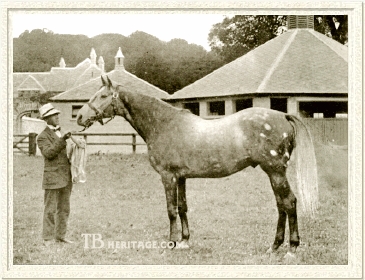
    Grey Horses

    Native Dancer


    Anyone who has known me for very long knows that I like grey horses. I don't know what created this propensity, but it is there. Here is some information that may or may not be interesting for you.

    I have started with Native Dancer as he was the first horse to really garner the television spotlight of the modern era. Would he have had as much interest from the general public in the new age of television if he had been a more traditional Thoroughbred color? Probably not. His coat color stood apart for fans watching him run live as well as those watching him run on television.

    Statistically in 1953, only one in every one-hundred-thousand thoroughbreds was grey. When Native Dancer appeared on the scene, there were very few grey horses that had shown any mettle in racing. One was the stallion Mahmoud and the other a horse called First Fiddle.
    Mahmoud (1936-1962)

    In addition to the statisical limitation on actual numbers of grey horses, many horsemen felt that grey horses were inferior to other colors. There were theories that greys lacked stamina, were unlucky, were diseased. Color alone was influencing how people perceived the grey horses.

    Interestingly, there would be no grey horses available if it weren't for a horse called LeSancy, a French stallion that all modern grey pedigrees are traceable to. If this horse had not factored in on Thoroughbreds, the grey probably would have disappeared in the late 1800's.

    LeSancy

    LeSancy's son, Le Samaritain won the majore race the French St. Leger. He sired a colt called Roi Herode who raced and then was retired to Ireland to stand at stud. From there, Roi Herode sired The Tetrarch which was an interestingly colored grey horse that had white patches throughout his coat. He was nicknamed "The Spotted Wonder" and won all seven of his two-year-old races in England, but was then injured and retired to stud. His daughter Mumtaz Mahal figured prominently in many modern grey pedigrees.

    The Tetrarch
    After The Tetrarch, there was some renewal of faith in grey horses, however there was still prejudice toward the color and many horsemen avoided them. As strange as this is to me, there were races available only to grey horses as recently as the 1940's. In the 1950's, the color was still considered a novelty and many still believed the grey horses to be genetically inferior to more standard colors.
    Of course the grey color has no effect the running ability of any horse, but even today there are people that believe greys are less suitable and less talented.


    To Further Your Education: