29 December 2012

Dog trivia - longest reign as most popular in America


Q: Which breed has the longest consecutive reign as the #1 most popular dog in America?
    • Labrador Retriever
    • Poodle
    • Boston Terrier
    • Bulldog

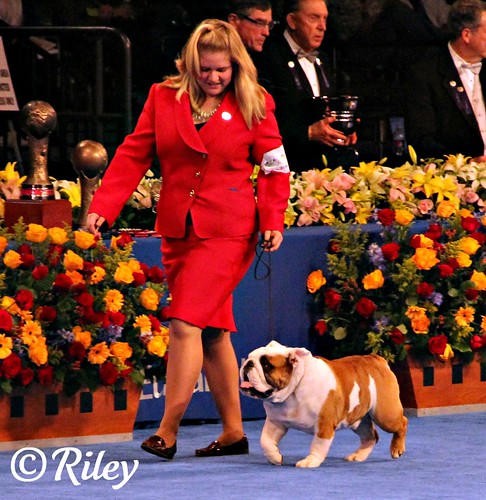
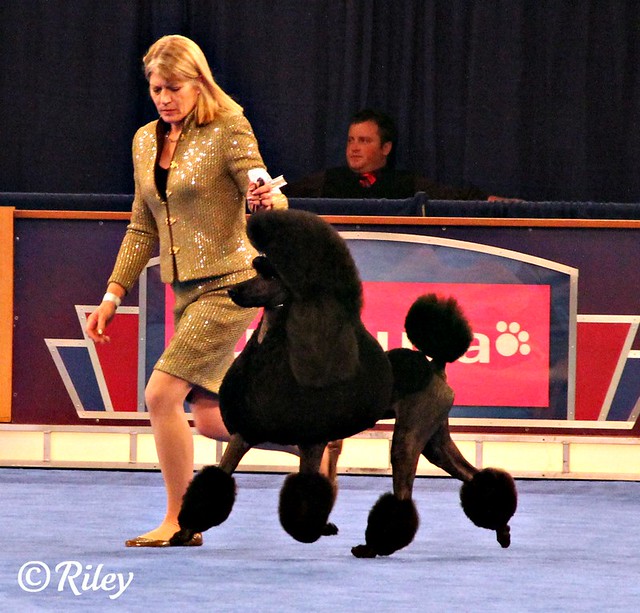
A: The Poodle holds the record for being the most popular dog for 22 consecutive years (1960 – 1982).  Poodles are one of the high achievers of the canine world and the breed is highly intelligent, hardy and excels in obedience training. Yes, the coat can be a bit more maintenance than some breeds, but you don't have to keep them in show coats.

About the Poodle
Many people think the Poodle isn't smart because they always look so primped up with their fancy hairdos, but the Poodle is smart, active and excels in obedience training. This breed comes in three size varieties, which is probably why so many people like the breed. Poodles can be a variety of solid colors, including white, black, apricot and gray. In AKC they should not be parti-colored, but the breed does come in that color too and you can see parti-colored Poodles in UKC and performance events.

A Look Back
The Poodle originated in Germany as a water retriever. The stylish hairdo, called the "Poodle clip" was designed by hunters to help the dogs move through the water more efficiently. The patches of hair left on the body are there to protect vital organs and joints which are susceptible to cold when the dogs are retrieving. The largest size, the Standard variety is the oldest of the three Poodle varieties. The medium sized Miniature variety may have been used for truffle hunting -- a little fancier than a pig. The smallest size, Toy Poodle was often used in stage performances and circuses as early as 1700 and through the 1800s.

The smaller two varieties, the Miniature and Toy Poodles were likely developed by crossing small Standard Poodles with Maltese and Havanese to bring down the size. The Standard Poodle was first developed as a hunting dog, however the Miniature and Toy varieties have always been strictly companion dogs, and were popular in the French court from the reign of Louis XIV through that of Louis XVI

Poodles were first brought to the United States at the end of the 19th century, but the breed did not become popular until after World War II. By the mid 1950s, the Poodle was fast becoming the most popular breed in the United States.

Is a Poodle right for you? 
Poodles can live in almost any size abode and their almost hypoallergenic coat may reduce allergies, but that coat usually does require professional grooming. The Poodle is an active breed and requires daily exercise, but as an upside, you'll get out and walking too.

Thanks for stopping past and hope you have a wonderful day!


27 December 2012

Homemade dog treats - simple!


These look pretty good. Thanks to AKC for including them in a newsletter. Yes, that's Bailey the Chinook in the image -- isn't she a sweet thing!

Holiday Dog Treats
It's the time of year when everyone indulges in special treats, but holiday favorites such as turkey scraps and chocolate are harmful for dogs. These homemade treats are dog-friendly and delicious, with a hint of holiday flare. Make some for your special dog and more to share with other canine friends!
Pumpkin Peanut Butter Biscuits
  • 2 1/2 cups whole wheat or barley flour
  • 2 eggs
  • 1 cup canned pumpkin
  • 3 tablespoons peanut butter
  • 1/2 teaspoon cinnamon
  1. Preheat oven to 350 degrees
  2. Stir dry ingredients in medium bowl. In separate bowl, whisk together eggs, pumpkin, and peanut butter. Add egg mixture to flour mixture and knead thoroughly. Dough should be dry and stiff; add small amounts of water as needed to make it workable. (If dough is too sticky, add small amounts of flour.) Roll dough into half-inch thickness and cut into half-inch pieces, using knife or cookie cutters
  3. Bake about 40 minutes, or until hard and dry.


26 December 2012

Learn to recognize your horse's language


Our horses are telling us things all the time -- it's up to us to listen to them. Take a look at a quick bit of information here:  Learn to recognize your horse's language » Times Record News Mobile


21 December 2012

Police Widen Search for Missing Trainer Owen Brennan


The photo was taken before his stroke and he is quite a bit thinner now. Brennan is described as white, 5ft 7in, of slim build, with brown short hair that is going grey. He was last seen wearing brown denim trousers with a red cross on the back pocket, a brown cotton-type jacket with a wool lining and a fur collar. He may possibly be wearing a cap. He walks with a stoop.

More information available here:


19 December 2012

Respected dog breeder killed, beloved dog hit by car


KCTV5

KANSAS CITY, KS

Peter Belmont was a breeder of Afghan hounds under the kennel name Elmo. The 69-year-old former educator was found inside his home Sunday, the victim of what the police are calling a homicide.

In addition to judging dogs, Belmont was an accomplished artist, specializing in paintings and sculptures.  You'll be able to see his love for dogs when you look at his art, some of his work is viewable here Belmont Art
ad more here: http://www.kansascity.com/2012/12/19/3972865/kck-homicide-victim-had-global.html#storylink=cpy

One of Belmont's dogs, Frankie, escaped from the house and was hit by a car. He is awaiting surgery at the VCA Animal Hospital in Mission. If you care to help Frankie get surgery, call the vet's office at 913-722-5566. After he recovers, Belmont's estate will help find a new home.

If you have any information about Belmont's killer, contact the TIPS Hotline at 816-474-TIPS. 


Dr. Pol's table manners… for your pets!


Now that the holidays are in full swing, it’s important to take into consideration the tempting dishes that are within short reach of your four-legged friends. World-renowned veterinarian, Dr. Pol, from National Geographic WILD’s #1 series and highest-rated telecast on the network, The Incredible Dr. Pol advises which holiday dishes you can and cannot share with your furry friends. The holidays should be filled with family and fun, not tragedy. 

As with all things edible, most of the time, a little does not harm them, but your pets don’t know when to stop! Many pets can outsmart us when it comes to food, so Dr. Pol has put together his “Table Manners” for you to follow and avoid a holiday headache. 

  • Don’t leave food out unsupervised anywhere—even the smallest dog will find a way to reach it! When the feast is over, make sure the leftovers are not accessible for our four-footed friends— that means a locking lid on a garbage pail versus a bag on the back porch.
  • Don't give your pet a turkey bone – the long hollow bones will splinter and may puncture the intestines. Keep in mind that raw bones are more digestible, while processed or cooked bones are not.
  • Don't give your pet a ham bone. The ringbone can lodge itself very tightly around the bottom jaw and the bones get stuck in their digestive tracts.
  • Don't share anything chocolate with your dog. The caffeine in chocolate, coffee, and tea is all the same and can cause vomiting, hyperactivity and, in larger quantities, could be lethal.
  • Don't give your pet anything that contains onions, garlic, grapes, kale and Brussels sprouts. These ingredients combined or on their own can easily cause gastrointestinal upsets. In larger doses, they can cause trouble with circulation and kidneys.
  • Do not leave a poinsettia on the floor or in reach of your dog. It is a pretty holiday plant, but it is not supposed to be eaten! It is poisonous to our pets.
As you can see, there are many things to watch while entertaining this holiday season. It is so much easier to prevent accidents from happening than to try to treat the results.
If you haven't had an opportunity to see Dr. Pol, the highly-anticipated third season of The Incredible Dr. Pol premieres January 5th on National Geographic WILD. To keep up with Dr. Pol follow him on Twitter or Facebook.

18 December 2012

It’s Not to Late to Give Dogs the Advantage of Staying in a Home this Holiday Season While Owners Travel With Rover.com’s Help


Dog Boarding Service Connects Dog Sitters with Dog Owners for Cozier, Real Home Stays 


SEATTLE (December 14, 2012) The clock is ticking with big holiday travel time nearly here. What to do with man’s best friend while owners travel is a question many procrastinators are asking themselves just about now! Lucky for them there is an easy, affordable solution - it’s Rover.com, the in-home dog care industry leader. Rover.com makes it easier than ever for dog owners to connect with local dog sitters for a more convenient, affordable and friendlier dog boarding experience, even at a time like this.

“The holidays can be incredibly stressful even for the most organized of dog owners. With Rover.com you can find the best home environment stay for your dog that will leave you feeling confident that while your are away, your dog is safe, secure and well loved,” said Aaron Easterly, CEO of Rover.com  “We encourage anyone interested in finding a good home for their dog over the holidays to start now to make arrangements, its never to early to secure the best home away from home for your pooch.”

Since Rover.com launched less than a year ago area, the service has already registered members in over 3,000 cities across America, with thousands of sitters eager to book stays for dogs over the holidays.  After all Rover.com knows that dogs prefer to stay in a real home while their families are away, whether at a sitter's residence or their own. 

Rover.com is very easy to use.  Any dog owner can log onto Rover.com and browse hundreds of local, approved dog sitter profiles to find the best match based on price, experience, and location. Conversely those interested in becoming a dog sitter may apply on the site to be listed.

Highlights
Unparalleled Protection and Peace of Mind While You’re Away
:  Rover.com offers 24/7 access to licensed veterinary consultation via Rover.com’s exclusive partnership with VetLIVE.com. This service can help to avoid unnecessary and expensive trips to the vet, or expedite necessary care and attention.

Rover.com provides customer support 24/7, 365 days a year to ensure the best experience for all members. In fact, Rover.com guarantees member satisfaction. The entire team of customer service representatives are fellow dog owners, dog lovers or sitters themselves. They are available from the beginning of the process to the end, answering questions and servicing last minute requests.

Every stay booked on Rover.com is covered by Peace of Mind Protection coverage and a Satisfaction Guarantee. 

Quality Sitters:  All Rover.com sitters must pass through a multi-tiered approval and review process before they are listed on the site.  Badges on sitter profiles identify those members who are trained in dog first aid and CPR, contribute a portion of their dog sitting proceeds to charity, or are members of a professional dog-training or dog-sitting organization. Reviews posted by fellow Rover.com members can also help inform the best choice for your pooch. 

Communication During the Stay:  Rover.com sitters communicate with owners. They can send photos using a Rover.com mobile app, the Rover.com website and email notifications.

Rover.com also enables dog owners to document instructions, dog info such as preferences, vet contact information, etc. This information is always easily available to the sitter during the stay and can be easily updated for future sitters and stays. 

Rover.com is free to join and charges a 15% fee for all transactions booked through the site. With nightly rates typically ranging from $25 - $35, all dog owners can find a sitter to fit their budget. 

About Rover.com

Rover.com, the in-home dog care industry leader, connects dog owners with local dog sitters online to provide real homes when families travel. Rover.com maintains the mission of creating a safe, loving home for dogs even when owners are away by offering an alternative to traditional caged boarding facilities, or family, friends and neighbors who sit in a pinch. Seattle based Rover.com operates in thousands of cities across the U.S. with tens of thousands of members.
To learn more visit http:// www.Rover.com and join us on Facebook at http://www.facebook.com/RoverDotCom and Twitter @RoverDotCom. 


16 December 2012

Book Review: Rider and Horse Back to Back: Establishing a Mobile, Stable Core in the Saddle by Susanne von Dietze and Isabelle von Neumann-Cosel


Rider and Horse Back to Back: Establishing a Mobile, Stable Core in the Saddle is geared at achieving a healthier experience for both rider and horse. The book focuses on the back and its importance in riding techniques. It explains how a rider’s back—in constant motion when seated on a horse—becomes one of the main channels of communication between horse and rider. There are plenty of anatomical lessons and exercises, and it also teaches riders how to build stability by positioning their backs in the center of the horse. Rider & Horse Back to Back  explains how to improve mobility and control of the back in motion and includes detailed training plans showing how to achieve a more effective and attractive riding position while deepening the connection between horse and rider.

As an advanced rider and riding instructor, I really enjoyed the book and the information. Rider & Horse Back to Back has information that will benefit every level of rider, but the tone of the book seemed to be geared toward a more experienced rider. That being said, all levels of riders will find things that will help their riding and their partnership with their horses.

Rider & Horse Back to Back will help riders learn skills that will reduce pain and increase core stability for both the rider and the horse. This alone will improve people’s experiences riding and may help them be more competitive if they choose to go that route.

The book recommends working on exercises like biking, swimming, and gymnastics to help riders become more fit, and that in turn helps their horses perform to a higher level.

Rider & Horse Back to Back is highly recommended for all levels of riders and their instructors too.

Want this book, click the image below:


Article first published as Book Review: Rider and Horse Back to Back: Establishing a Mobile, Stable Core in the Saddle by Susanne von Dietze and Isabelle von Neumann-Cosel on Blogcritics.

Thanks for stopping past.This should get your back and body moving. Gary Glitter - Rock'n Roll Part 2 1972

14 December 2012

Ticks


Because of the extra-mild winter this year, the early spring could bring an unwelcome guest: the tick. Be warned: The warmer weather is good news for people and pets who want to be outside, but beware of an uptick of the hard-to-detect pest. 

The basic reason is that the eggs will hatch sooner. "Eggs are already in the ground, but this is the time that they will be coming out in great numbers," said Pollie Rueda, an entomologist stationed at the Smithsonian and Walter Reed Army institute of Research. He noted that the normal tick season is from May through August, but with the 70-degree temperatures in some places, the ticks may get a jump on the season.
Ticks that are already out and about are the visible adult, sesame-sized ones, noted Kristen Nordlund of the Centers for Disease Control and Prevention. 

Think of these little buggers as the arachnid form of vampires. They hang out in blades of grass for a host to come along -- a mouse, a dog, or a human -- to attach themselves and feed off your blood over days, or until discovered, and they often leave disease behind -- sometimes multiple illnesses. 

The big concern for humans, according to the CDC, is that most tick infections occur during the "nymph" stage. Those recently hatched ticks are the size of the period at the end of this sentence, and they have four sets of legs and the ability to suck your blood. Because they are essentially invisible, preying on a host can easily go undetected. 

In most cases, the tick must be attached for 36-48 hours or more before the Lyme disease bacterium can be transmitted. Infections from ticks, such as Lyme disease (plus babesiosis, Rocky Mountain spotted fever, and anaplasmosisis), are on the rise and are difficult to diagnose. The symptoms are awful: from headaches to long-term joint pain and even heart problems. 

Since 1992, the cases of Lyme disease have doubled, according to the CDC, and more than 21,000 cases are reported every year. 

The CDC is conducting tests on actual households to confirm if spraying a pesticide in the backyard helps to reduce the incidence of human disease. Check its website for good information on preventive measures. 

Thanks for stopping past! Let me know if there is something you would like to know more about.

12 December 2012

AKC Owner-Handler Series


The American Kennel Club is launched a new event in 2012 that will take place at select dog shows around the country – the AKC Owner-Handler Series. 

Owner-handlers make up the majority of show entries and these people are the core of the conformation dog fancy. With this new program, AKC is going to spotlight the owner-handler by acknowledging the large amount of times and tremendous dedication that these people put into their dogs.  

The AKC Owner-Handler Series will take place after Best of Breed judging in each breed ring. This competition will be open to all non-professional owner-handlers, whether experienced or novice. To be entered in this part of the competition, all dogs' eligibility must be indicated by checking the Owner-Handler box on the official AKC entry form at the time of entering the dog show. Once entered, the entrant will be marked as Owner-Handler eligible with an asterisk (*) in both the steward's book and the show catalog.
How does the selection process work? Here’s the information from the AKC: Owner-Handler Best of Breed will be selected from the dogs that are eligible to compete in the Best of Breed competition including Winners Dog and Winners Bitch. If the Best of Breed/Variety winner is Owner-Handler eligible, it will automatically be Owner-Handler Best of Breed/Variety. If BOB is ineligible and Best of Opposite Sex is eligible, BOS will compete against the eligible Best of Breed dogs of the other sex. If the BOB and BOS winners are both ineligible, the judge will choose Owner-Handler Best of Breed from the eligible Selects and eligible WD or WB. If one of the Selects is eligible, the judge will excuse dogs of the same sex as the Select and judge the remaining dogs of the opposite sex including the eligible WD or WB. If the BOB, BOS and Selects are not eligible, the judge may choose any eligible dog remaining in the ring.

Based on points from Breed, Group and Best in Show wins accrued throughout the year, AKC will rank the dogs and invite the top owner-handled exhibits to a special year-end event where they will be able to compete for a Best Owner-Handler Award. 

AKC Owner-Handler Series Point Scale:
(Note: Owner-Handler Series points do not contribute to championship points)
Best in Show
100
Group 1
30
Group 2
20
Group 3
15
Group 4
10
Best of Breed
5

The AKC is hoping that many Owner-Handlers will take part in this new series and they look forward to your feedback about the new Series. They plan to add shows featuring this new event throughout the year, so stay tuned for updates on www.akc.org

The first events in the 2012 AKC Owner-Handler Series took place at:
Dog Fanciers Association of Oregon – January 21st
Oakland County Kennel Club – January 21st
Sahuaro State Kennel Club – February 4th
Colorado Kennel Club – February 19th
International Kennel Club of Chicago – February 26th
Ft. Worth Kennel Club – March 24th
Atlanta Kennel Club – April 14th
Greenwich Kennel Club – June 9th

If you have any questions or feedback to share about the AKC Owner-Handler Series, AKC encourages you to contact Bri Tesarz at glt@akc.org or 919-816-3514. 


Email me anytime, follow me on Twitter, tell me your story, and please subscribe to my Examiner - Dogs column!

10 December 2012

AKC Beginner Novice


Napping Chinook -- Bailey

The American Kennel Club (AKC) introduced the Beginner Novice class and title in 2010. This class is meant to be done before entering into the Novice ring, much as the pre-novice class was, only with a title option. Dogs that get a qualifying score at three trials with two different judges will earn the title “BN” after their name.

1. Heel on Leash
2. Figure 8
3. Sit for Exam
4. Sit Stay
5. Recall

Sit for exam.
This exercise is meant to be performed on leash and act as a training tool towards the Novice level “Stand for exam.” The dog will need to be on a six foot leash and the judge will approach the dog from the front, and touch the dog’s head with only his fingers.

Sit Stay.
The leash remains on for this behavior, but will be placed on the ground. The owner will leave the dog on the judge’s command and walk the perimeter of the ring. When the owner returns to the heel position the exercise is complete.

Recall.
This is off leash and the handler will be approximately twenty-five feet from the dog. The owner will call the dog and the dog should sit in front. No finish is required for this behavior.