21 January 2013

Protect your pet from plastic chip bags


Dogs are curious and rely on their noses for lots of information, including finding food. If you’ve ever had a trash raiding dog, you know how tempting old snack food, cereal and dog food bags can be. Any bag with food inside or crumbs or even a little bit of salt in the bottom is a tempting appetizer to even the most restrained dog. 

Dogs that grab a bag of chips – or an empty bag – are eating and trying to lick out the bottom of the sack. Unfortunately, the bag often gets stuck on the dog’s head and then the dog panics. Veterinarians say this type of accident has happened over and over and a number of dogs have died. 

Dogs will put their head inside a bag trying to eat, but then they panic. As they breathe harder and harder they essentially become enclosed and even trapped in the bag and they have a very difficult time removing that. This can happen with any snack, cereal, pet treat or pet food bag.

The bag creates a seal around the animal’s head, and no air can get in. Once the bag is stuck on the animal’s head, they are continually breathing in and out that same air which gets higher and higher in carbon dioxide levels. 

No matter how strong the dog is, once the seal forms it is virtually impossible to get the bag off and it may only be a matter of minutes for a dog to suffocate in this situation. 

The danger of Mylar chip bags to pets and children is not widely known, but there is a growing number of people working to bring this issue to chip manufacturers and hopefully that will lead to education and perhaps warnings on the bags, with the ultimate hope of a change in bag material. 

Like many dog owners, I had no idea something like this could happen until it happened to a friend’s beloved dog. There are some simple solutions that you can employ to save your dog’s life. 
  • The simplest solution is to tear off the bottom of the bag before you throw it away. 
  • Cut the bags into smaller pieces so there is no chance of the bag becoming lodged on an animal’s head. 
  • Keep food bags and boxes stored out of your dog’s reach.    
  • Keep trash can lids secure. 
  • Use a trash container in your house that has a dog-proof lid.   
  • Keep you trash container in a slide out drawer or behind a closed door with a child-proof lock.  
Links:
Pet Hazards of Snacking | Broad Ripple Animal Clinic Blog
Family Warns Of Dog Treat Bag Dangers After Losing Pup  « CBS Minnesota
Prevent Pet Suffocation Facebook page
Pit Bull Suffocates Inside Potato Chip Bag - Philadelphia News, Weather and Sports from WTXF FOX 29


18 January 2013

Review: Bow Wow Wow Dog shampoo


Full disclosure: I was sent two bottles of Bow Wow Wow shampoos to try on my dogs. The products I received are reviewed below, but there are other scents available from the manufacturer.  

Let’s start with how often should a dog be bathed. The simplest answer is as often as you want to bathe them. Dogs with skin issues or are dirty from romping in the mud or are show dogs getting a lot of products put on them will need to be shampooed more frequently than most companion dogs. 

Cedarwood Anise is has warm licorice, cedar and sweet orange scents to help eliminate the "wet dog" smell while adding a warm, woodsy and comforting scent to the bath area. Dogs have over 200 million scent receptors – you have about 5 million. Those scent receptors make bath time more pleasant for both you and your dog.  Anise smells like licorice, and combined with cedar and a twist of sweet orange makes for a wonderful deodorizing shampoo.

Oatmeal Milk & Honey is great for dogs with sensitive skin as it uses extremely gentle ingredients. This shampoo required a synthetic blend fragrance, and even though it is very slight, the manufacturer offers it because it smells wonderful. To compensate for the fragrance usage, they added real oatmilk extract to help soften fur and skin.

All Bow Wow Wow shampoos use chamomile, aloe vera, green tea, and green algae extract to condition skin and coat. Coconut milk and vegetable protein provide a gentle foaming action naturally and without chemicals, leaving your furry friend feeling silky soft.  Sold in 16-ounce bottles, this is one of the mildest, gentlest and most natural dog shampoos you’ll find. 


Caribbean Solutions Company is a soap specialty company, and they have spent a lot of time developing these natural dog shampoos to be the safest possible solution for your pet. The products are as tearless as water, with the optimal pH of 7, the same as water. As an added perk, the Caribbean Sol folks share that these shampoos contain one of the best skunk deodorizers in the world, also nontoxic of course.  

These are nice shampoos and I feel comfortable recommending them. They are all natural, chemical free, flea and tick treatment safe, pH balanced for a tear free formula, great for dogs with sensitive skin and owners who like natural products for their pets. For my use, I would like to be able to dilute them a bit more to wash more dogs per bottle, but all-in-all it is a good value for the price.


05 January 2013

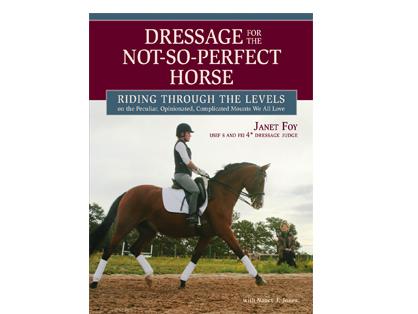
Book Review: Dressage for the Not-So-Perfect Horse: Riding Through the Levels on the Peculiar, Opinionated, Complicated Mounts We All Love by Janet Foy


Many riders pursue the sport of dressage in North America, and the majority of those riders do it on a budget with a horse they have and it is often a horse they can afford. What this means is riders are challenged with the mastery of one of the world’s most esteemed equestrian events on horses that may not be up to the task. Dressage for the Not-So-Perfect Horse, Riding Through the Levels on the Peculiar, Opinionated, Complicated Mounts We All Love shows that this may be because they are not bred specifically for the task, or even if they have been bred for the task, they may not be top prospects due to conformation, injury or even not growing to the ideal size, there are any number of reasons why a horse is not perfectly suited to compete in the world arena.

Janet Foy, is a dressage judge, clinician, and riding coach and has ridden many different types of horses in dressage competitions, and has compiled her best tips for training and showing in Dressage for the Not-So-Perfect Horse, Riding Through the Levels on the Peculiar, Opinionated, Complicated Mounts We All Love. Foy acknowledges that many riders face the challenge of refining their dressage skills on horses with behavioral quirks, conformational impediments, and age or soundness issues.

Dressage for the Not-So-Perfect Horse, Riding Through the Levels on the Peculiar, Opinionated, Complicated Mounts We All Love was a book I was hoping to love and recommend to equestrians everywhere, but I will not be doing that. I like Janet Foy as a judge, a clinician and magazine article author and find her sense of humor and ability to share information in a relational manner to be enjoyable. The book did not come across in that same manner. Evaluating the book as a how-to guide for less experienced riders I found myself concerned with the number of photos with riders pointing their toes down with heels and spurs up into the horses sides. Not only is this unattractive, it is unsafe. Perhaps the non-vintage photos should have been re-shot to show proper equitation so newer riders would be able to emulate the correct position(s) as they are working with their not-so-perfect horses.

Borrow this book from a friend or check it out of your local library, but save yourself the $32.95 and the space on your horse library bookshelf.


Article first published as Book Review: Dressage for the Not-So-Perfect Horse: Riding Through the Levels on the Peculiar, Opinionated, Complicated Mounts We All Love by Janet Foy on Blogcritics.

04 January 2013

There are 2 kinds of dogs


I bet you are expecting that I will say it is good dogs and bad dogs, but that's not what it is. The two types of dogs are ones that will immediately test you and those that immediately cooperate. That is a lot like most animals, including people.

Have you ever considered stop and start behaviors in your companions? Stop behaviors would be things like whining, teasing, arguing, pouting, and tantrums -- yes, I grabbed that right out of child behaviors, but your dogs are often doing the same things. Start behaviors include things like bedtime, homework and eating -- if you use praise, simple requests and offer natural consequences all things will likely work out great.

Do you ever find yourself reasoning with a child or a pet? How quickly did you figure out that doesn't really work all that well. (If you haven't had that epiphany yet, trust me and stop negotiating with children and animals. Long diatribes full or words and reasons are not helpful and often push you to think of what the next step(s) might be -- and they are never great. The progress often looks like this: talk-persuade-argue-yell-hit. Wow, that is quite a sequence and it can be avoided.

The better way is to go with a largely non-verbal approach and repeat until they get what you are saying. Now, I'm not talking about shoving them around, just giving patient, gentle and persistent direction regarding what you want to occur. Sometimes dogs (and animals in general) just need the proper direction to become successful.

This is a bit like the treat analogy -- start as a Coca-Cola machine and work toward being a slot machine on rewards. For improving your training relationship you'll begin as a benign dictator where you act as judge and jury -- no need for an executioner. This is really more for safety than any other reason. Just like you wouldn't allow a toddler outside alone to play, your dog won't be allowed to be alone and make huge mistakes. As things improve, your system will be moving to a democracy where they earn and contribute more to their own well-being. 

Remember that non-compliance isn't always a lack of cooperation, it may actually be related to a lack of information. Train and explain and your results will be better. 


03 January 2013

Arabian horses, seahorses, plastic surgery and cloning


This is a Seahorse (Image) -- note the big upper head and the tiny lower face.Attractive in a seahorse, but to my eye not as attractive in an Arabian horse. I'm unclear on why the extremes are allowed to happen, and I don't like them in horses, dogs, cattle, people... Why fall for the fads? How about taking the time to actually breed and develop sound animals? I know, call me crazy.

Here's a little horse tale for your enjoyment. Be sure to follow the links for even more details.

Then there is this horse -- Magnum Psyche (Image) the horse that plastic surgery created...
Yes, he had plastic surgery on his throat latch area and then was able to keep showing. Notice the really flat topline. The next photo is one of his offspring, Magdalene (Image) and note the more seahorse looking head. Also a fairly flat topline... not great for riding, but certainly wins a lot in the halter venues.


I am unclear when this seahorse look became popular, but there is plenty of it out there. I also wonder what has happened to the Arabian horse by blending all these various lines and types so they become a mish-mash of everything and therefore really nothing.

As I was looking at the photos of Arabians, I also recalled the lawsuits, the cloning of LD PISTAL, AHA #573783, D/O/B 5/20/2000 and more...


Links:

Thanks for stopping past.