|
| |||
 |
| ||
Showing posts with label Animals. Show all posts
Showing posts with label Animals. Show all posts
13 September 2013
New clothing line for cat lovers


03 April 2013
Feeding your dog - the basics

These are questions we get a lot from customers — hopefully the answer will help you feed your dogs more easily.
WATER
Water is the most important piece of feeding pets, and all pets need a constant supply of clean, fresh water. Water is important all year, but this is especially true during warm weather. Using a smaller bowl and refilling it often is a great way to keep your pet’s water supply fresh. Want to really be on top of the water portion? Be sure to wash the water bowl every day.
PUPPIES
How often do I feed my puppy?
Your wonderful new puppy companion should be eating at least three times a day. Four is better, but we are assuming you are working to support your new friend. By the time your puppy is six months old, you can gradually cut back to feeding two times a day. You dog should stay on the twice daily feeding from this point forward. The twice-daily feedings let your dog digest their food correctly and it helps keep their metabolism working at a proper rate.
What type of food should I choose?
Dry food (kibble) is the easiest alternative. The kibbles help keep your pup’s teeth and gums healthy and clean. Look at the back of the food bag and read the AAFCO statement. It should read something like this: “formulated for all life stages” or “formulated for growth,” this means it is designed to support your puppy’s development. Some small pups have difficulty chewing the kibble. If yours is one of these, you can always add a little warm (not hot) water to the food. This will soften the kibble and help them chew the pieces more easily.
Ideally you will select a food that falls into the “Super Premium” or “Premium” categories. The meat source should be in the first ingredients. These foods are higher priced, but actually end up costing about the same or even less than the brands available at the grocery or discount stores. The better the quality, the better the health of your puppy. Another big plus with the super premium foods is fewer stools. That means less pooper scooping which is always a good thing!
How much do I feed my puppy?
Your growing companion is not likely to be overweight, and probably can eat as much as they want when they are small. Puppies that gulp down the food and gorge themselves until their bellies are like little basketballs should be fed smaller amounts more frequently.
Most pet food manufactures have feeding guidelines on their bags. As a general rule, these guidelines will be higher than the amount most pups need in a day, although some pups will need more than the suggested feeding amount. Use these guidelines as just that, a rough guide for how much the pup should eat. If your pup gets loose stools after eating too much, cut back by 10% until the stools are better formed and you have found a happy medium.
What is challenge feeding?
Challenge feeding means the food is available for a brief period of time and then is taken away. Remove any leftover food after the puppy has had a chance to eat what he wants. (15 minutes is usually sufficient.) By removing the food, your house training will be successful more quickly and if your dog is ever sick and doesn’t eat, you’ll know something isn’t right, right away.
Eating a meal strongly stimulates your puppy’s desire to eliminate. By taking pup out shortly after eating, when you know he wants to “poop,” you can get your pup into the habit of doing the socially acceptable thing, and get praise for doing something right. What a smart puppy you are! Some pups will need to go outside immediately and some will take up to 15 minutes. You will know once you start studying pups behavior what time is the right time.
Most puppies are good eaters. If you have gotten one that is reluctant, you can always add a little canned food to the kibbles. Again, stick with a super premium or premium food to keep your pup as healthy as possible. Foods that are mostly liver may be too rich and give pup the “trots” so look for something like chicken, lamb or turkey.
Can I give my puppy cow’s milk?
Yes, if you want to risk your pup having diarrhea. Most pups don’t tolerate cow’s milk very well, so best to just avoid it.
Why isn’t my puppy eating as much?
Many puppies will start regulating how much they eat as their bodies start requiring less food. This is normal. The majority of puppies have achieved most of their growth at about six months. You will need to start watching how much your puppy is eating and perhaps begin to cut back on the daily food allotment. Your puppy should have a nice covering of flesh on his body. (Not a parka-like covering.) You should be able to feel the back ribs when you run your hands over the puppy’s sides.
When looking at your puppy from above, your pup should have a “girlish figure” that looks like an hourglass. The shoulders are the top of the hourglass, the waist is the middle and the hips are the bottom. We are not looking for a Scarlet O’Hara wasp waist here, just a moderate hourglass. From the side, there should be a slight tuck up after the back of the rib cage, before the hind legs. Your veterinarian can teach you how to look for these attributes and to determine if Fido is fit or fat.
ADULT DOGS
What type of food should I feed?
The same guidelines apply to the adults, super premium or premium kibbled food works best. AAFCO should state “for all life stages” or “for maintenance of adult dogs.” For older or overweight dogs, look for a formula that is geared specifically for them. You will want a meat source as one of the first ingredient. Dry kibble is the simplest way to feed your adult dog, just like it is with your puppy.
How often should I feed?
Twice a day is ideal for most adult dogs. Try to feed at the same time each day to enhance digestion and promote perfect potty habits. If your older dog is not as healthy as he should be, your can add a third or fourth feeding to help with the digestive process. Big dogs should be fed on a platform to aid in digestion. The good rule of thumb is bowl height should keep the neck horizontally level with the floor.
Why should I challenge feed my adult?
Challenge feeding gives you leader status because you control the food source, and it helps you know if your dog is feeling all right, and it keeps your dog from becoming a picky eater. If your dog refuses to eat, take the food up and don’t offer anything until the next scheduled feeding. Sounds horrible, but it is the best way to avoid having a problem eater. If you panic when your dog turns their nose up at food and race out to get something new to toss in, you lose. Your dog has won the battle of the bowl. You will have a dog that picks at food until you throw in leftover prime rib, gravy, whatever will make them eat. A dog that picks and wins will ultimately lose by not getting proper nutrition and by having digestive upset from changing diets to tempt him to eat. If your dog doesn’t have an underlying health concern, he won’t deprive himself long enough to cause harm — wait him out and know you are doing the right thing. (If there are other factors in the food strike, consult your veterinarian to rule out any illness.)
Can I feed canned food?
Canned food is fine for your pet too. (Remember the super premium and premium foods are best.) Cans are more costly than dry, but dogs really liked the canned option. A good solution with canned food is to add some into the kibble and use it for variety in your dog’s diet.
How much should I feed?
Pay attention to your dog and how fit he is. A really active dog will need more food than a sofa surfer. Again, most manufacturers have recommended amounts on the bags and cans of food. These are usually higher than the average dog needs. Look at your dog everyday to determine how their body looks. The same girlish figure applies to the adult dogs, as does the feeling the back ribs as you run your fingers over the dog’s body. Your veterinarian can help you determine the ideal weight for your dog, and will have a scale to check your progress on dogs that need to gain or lose weight.
Thanks for stopping past.
02 April 2013
Questions to ask before your buy a puppy or dog

Knowing how your puppy has been raised (hopefully indoors) and socialized to people, places and things are critical to the decision process.
When you get your puppy, take it to visit your veterinarian right away to make sure your puppy is as healthy as possible. The more you know about your puppy, the better. Like most things, knowledge is power.
Things to Ask the Breeder
- How many years have you been breeding dogs?
- How many years breeding this breed of dogs?
- Is this the only breed of dog you have available?
- How many litters have you bred?
- Can you supply a customer or reference list?
- If the breeder answers truthfully, you should have an idea if these breeders are legitimate or a professional breeder. Pet stores probably won’t know these answers because their puppies generally come from a commercial supplier.
- Do you show your dogs in AKC, UKC, IABCA? Ideally your breeder is showing their dogs for an objective outside opinion.
- Which dog clubs do you belong to?
- How many dogs have you bred or owned and what titles have they achieved? (For more information on titles go to UKC or AKC .)
- Some examples of titles include:
CD (Obedience title)
CDX (Obedience)
UD (Obedience)
UDX (Obedience)
OTCH (Obedience)
TD (Tracking)
TDX (Tracking)
FH (Tracking)
JH (Hunting)
SH (Hunting)
MH( Hunting)
FC (Hunting)
ScH I; ScH II, ScH III (Schutzhund)
Good breeders are usually actively competing or participating with their dogs. Pet store puppies usually do not come from breeders that are working and competing with their dogs.
Ask about the Parents
- What are the AKC or UKC registered names of the Sire (father) and the Dam (mother)? Both parents should have registration papers. When in doubt, check the details with the registering club.
- Why did you chose to breed these two particular dogs to each other?
- Are there some particular physical characteristics and personality traits that you are attempting to improve in your breeding line?
- Were these dogs bred because they are excellent examples of the breed with excellent temperaments or because the breeder was looking to make some quick money?
- Which of the following genetic tests/clearances/certifications did you obtain on the parents?
CERF (Checks on eyes)
Temperament
Ask About the Litter
- What is the name and phone number of the veterinarian that has seen and cared for the puppies?
- At what age will your puppies be ready to go to their new home? (Pups should stay with their mothers for a minimum of 7 weeks, this helps their social development with dog interactions.)
- What is the price based on? You may hear any of the following responses: Pet Quality, Show Quality, Breeding Quality. If you are told they are show or breeding quality, ask how the breeder has determined this. What is their experience showing dogs? Are there lots of dogs with titles and clean health checks?
- Does the breeder require that puppies not intended for breeding be spayed or neutered?
- Do you have your transfer copy of the registration papers? (AKC puppy papers are blue.)
- Do not pay extra for registration papers, this is a violation of kennel club rules. Notify the registering kennel club if this happens.
- Is there a money back or replacement puppy guarantee?
- Do you unconditionally take back any puppy/dog of your breeding? Anytime?
- Ask specifically what the breeder will do if your puppy is very sick. Will they treat it or euthanize?
- What conditions must the buyer satisfy?
25 February 2013
Book Review: Dog Trots Globe—to Paris and Provence by Sheron Long

Twelve-year-old Sheltie Chula Wula D'Augue doesn't let her age get in the way of exploring the world. In Dog Trots Globe--to Paris and Provence by Sheron Long, she "writes" about her adventures in Paris and Provence with her owners Sheron and Robert Long.

Dog Trots Globe is a wonderful treat. The reader follows as Chula takes her first international trip to France from Carmel Valley, California to explore farmer's markets in Saint-Rémy, hike in the Little Alps and visit Paris. Chula's adventures are shared through images, illustrations and excellent descriptions - from a Sheltie's point of view. For readers of the e-book, there are music videos to enhance the experience.
Why France? Long visited and fell in love with France while on a trip as a student. After dozens of return trips, she and her husband decided to take nine-year-old Chula with them to their 200-year-old house in St. Rémy-de-Provence where the couple spends two months in the spring and fall every year.

When the Longs decided to take Chula to France, they, like most pet owners, were concerned about having Chula on an airplane for such a long period of time. The author put in months of research to determine what airline would be best to fly Chula to France.
Two of the main criteria were non-stop flights and airlines that allowed dogs to stay with their owners in the lobby area until it was time to board the airplane. The best airline for Chula's first trip abroad was Air France which allowed Chula to remain with Long and her husband in the lobby until 20 minutes prior to take-off.

Once in France, Chula and the Long family ride the bullet train, going up to 200 miles per hour from Paris to Saint-Rémy in southern France. It is there that Chula begins to explore the French lifestyle from their base: the family's 200 hundred year old home.

Funny and informational, Dog Trots Globe opens the world of pet travel to more people, and the reader will find beautiful photographs and recommendations for dog-friendly places along the way. The advice and tips in the book will empower travelers to bring their faithful companions on their next vacation. And who doesn't enjoy travel more in the company of people and animals you love?

To keep up with Chula's travels, check out her Facebook page. All images courtesy of Chula and Dog Trots Globe. Visit Oh-I-See to get a copy of this book for your home.

Article first published as Book Review: Dog Trots Globe--to Paris and Provence by Sheron Long on Blogcritics.
21 January 2013
Protect your pet from plastic chip bags

Dogs are curious and rely on their
noses for lots of information, including finding food. If you’ve ever had a
trash raiding dog, you know how tempting old snack food, cereal and dog food
bags can be. Any bag with food inside or crumbs or even a little bit of salt in
the bottom is a tempting appetizer to even the most restrained dog.
Dogs that grab a bag of chips – or
an empty bag – are eating and trying to lick out the bottom of the sack.
Unfortunately, the bag often gets stuck on the dog’s head and then the dog
panics. Veterinarians say this type of accident has happened over and over and
a number of dogs have died.
Dogs will put their head inside a
bag trying to eat, but then they panic. As they breathe harder and harder they
essentially become enclosed and even trapped in the bag and they have a very
difficult time removing that. This can happen with any snack, cereal, pet treat
or pet food bag.
The bag creates a seal around the animal’s head, and no air can get in. Once the bag is stuck on the animal’s head, they are continually breathing in and out that same air which gets higher and higher in carbon dioxide levels.
The bag creates a seal around the animal’s head, and no air can get in. Once the bag is stuck on the animal’s head, they are continually breathing in and out that same air which gets higher and higher in carbon dioxide levels.
No matter how strong the dog is,
once the seal forms it is virtually impossible to get the bag off and it may
only be a matter of minutes for a dog to suffocate in this situation.
The danger of Mylar chip bags to
pets and children is not widely known, but there is a growing number of people
working to bring this issue to chip manufacturers and hopefully that will lead
to education and perhaps warnings on the bags, with the ultimate hope of a
change in bag material.
Like many dog owners, I had no idea
something like this could happen until it happened to a friend’s beloved dog.
There are some simple solutions that you can employ to save your dog’s
life.
- The simplest solution is to tear off the bottom of the bag before you throw it away.
- Cut the bags into smaller pieces so there is no chance of the bag becoming lodged on an animal’s head.
- Keep food bags and boxes stored out of your dog’s reach.
- Keep trash can lids secure.
- Use a trash container in your house that has a dog-proof lid.
- Keep you trash container in a slide out drawer or behind a closed door with a child-proof lock.
Links:
Pet Hazards of Snacking | Broad Ripple Animal Clinic Blog
Family Warns Of Dog Treat Bag Dangers After Losing Pup « CBS Minnesota
Prevent Pet Suffocation Facebook page
Pit Bull Suffocates Inside Potato Chip Bag - Philadelphia News, Weather and Sports from WTXF FOX 29
Pet Hazards of Snacking | Broad Ripple Animal Clinic Blog
Family Warns Of Dog Treat Bag Dangers After Losing Pup « CBS Minnesota
Prevent Pet Suffocation Facebook page
Pit Bull Suffocates Inside Potato Chip Bag - Philadelphia News, Weather and Sports from WTXF FOX 29
18 January 2013
Review: Bow Wow Wow Dog shampoo

Full disclosure: I was sent two bottles of Bow Wow
Wow shampoos to try on my dogs. The products I received are reviewed below, but
there are other scents available from the manufacturer.
Let’s start with how often should a dog be bathed.
The simplest answer is as often as you want to bathe them. Dogs with skin issues
or are dirty from romping in the mud or are show dogs getting a lot of products
put on them will need to be shampooed more frequently than most companion dogs.
Oatmeal Milk & Honey is great for dogs with sensitive skin as it uses extremely gentle ingredients. This shampoo required a synthetic blend fragrance, and even though it is very slight, the manufacturer offers it because it smells wonderful. To compensate for the fragrance usage, they added real oatmilk extract to help soften fur and skin.
All Bow Wow Wow shampoos use chamomile, aloe vera, green tea, and green algae extract to condition skin and coat. Coconut milk and vegetable protein provide a gentle foaming action naturally and without chemicals, leaving your furry friend feeling silky soft. Sold in 16-ounce bottles, this is one of the mildest, gentlest and most natural dog shampoos you’ll find.
Caribbean Solutions Company is a soap specialty company, and they have spent a lot of time developing these natural dog shampoos to be the safest possible solution for your pet. The products are as tearless as water, with the optimal pH of 7, the same as water. As an added perk, the Caribbean Sol folks share that these shampoos contain one of the best skunk deodorizers in the world, also nontoxic of course.
These are nice shampoos and I feel comfortable recommending
them. They are all natural, chemical free, flea and tick treatment safe, pH
balanced for a tear free formula, great for dogs with sensitive skin and owners
who like natural products for their pets. For my use, I would like to be able
to dilute them a bit more to wash more dogs per bottle, but all-in-all it is a
good value for the price.
04 January 2013
There are 2 kinds of dogs

I bet you are expecting that I will say it is good dogs and bad dogs, but that's not what it is. The two types of dogs are ones that will immediately test you and those that immediately cooperate. That is a lot like most animals, including people.
Have you ever considered stop and start behaviors in your companions? Stop behaviors would be things like whining, teasing, arguing, pouting, and tantrums -- yes, I grabbed that right out of child behaviors, but your dogs are often doing the same things. Start behaviors include things like bedtime, homework and eating -- if you use praise, simple requests and offer natural consequences all things will likely work out great.
Do you ever find yourself reasoning with a child or a pet? How quickly did you figure out that doesn't really work all that well. (If you haven't had that epiphany yet, trust me and stop negotiating with children and animals. Long diatribes full or words and reasons are not helpful and often push you to think of what the next step(s) might be -- and they are never great. The progress often looks like this: talk-persuade-argue-yell-hit. Wow, that is quite a sequence and it can be avoided.
The better way is to go with a largely non-verbal approach and repeat until they get what you are saying. Now, I'm not talking about shoving them around, just giving patient, gentle and persistent direction regarding what you want to occur. Sometimes dogs (and animals in general) just need the proper direction to become successful.
This is a bit like the treat analogy -- start as a Coca-Cola machine and work toward being a slot machine on rewards. For improving your training relationship you'll begin as a benign dictator where you act as judge and jury -- no need for an executioner. This is really more for safety than any other reason. Just like you wouldn't allow a toddler outside alone to play, your dog won't be allowed to be alone and make huge mistakes. As things improve, your system will be moving to a democracy where they earn and contribute more to their own well-being.
Remember that non-compliance isn't always a lack of cooperation, it may actually be related to a lack of information. Train and explain and your results will be better.
03 January 2013
Arabian horses, seahorses, plastic surgery and cloning

Here's a little horse tale for your enjoyment. Be sure to follow the links for even more details.


I am unclear when this seahorse look became popular, but there is plenty of it out there. I also wonder what has happened to the Arabian horse by blending all these various lines and types so they become a mish-mash of everything and therefore really nothing.
As I was looking at the photos of Arabians, I also recalled the lawsuits, the cloning of LD PISTAL, AHA #573783, D/O/B 5/20/2000 and more...
Links:
- Oh what a tangled web we…oh hell, this is just ridiculous | Fugly Horse of the Day
- LD Pistal | Arabian Horses, Stallions, Farms, Arabians, for sale - Arabian Horse Network
Thanks for stopping past.
29 December 2012
Dog trivia - longest reign as most popular in America
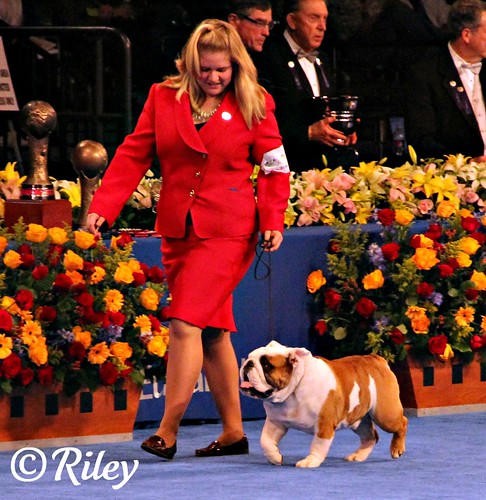
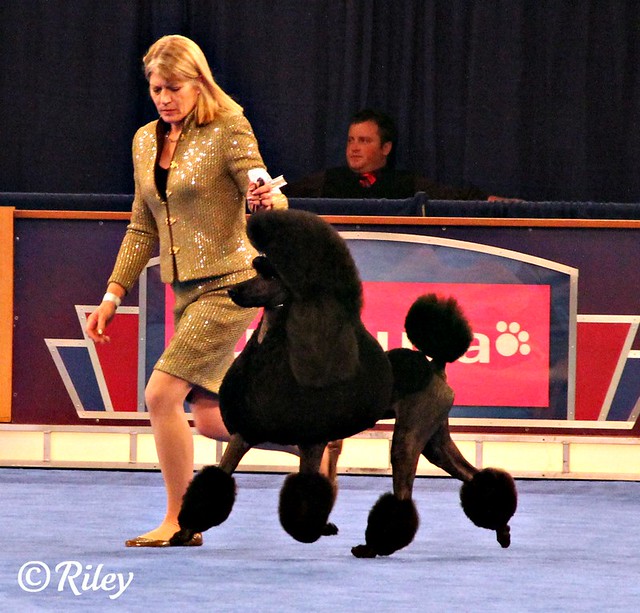
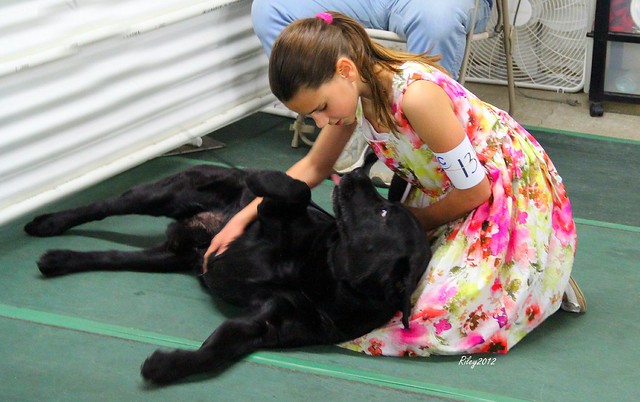
Q: Which breed has the longest consecutive reign as the #1 most popular dog in America?
- Labrador Retriever
- Poodle
- Boston Terrier
- Bulldog
A: The Poodle holds the record for being the most popular dog for 22 consecutive years (1960 – 1982). Poodles are one of the high achievers of the canine world and the breed is highly intelligent, hardy and excels in obedience training. Yes, the coat can be a bit more maintenance than some breeds, but you don't have to keep them in show coats.
About the Poodle
Many people think the Poodle isn't smart because they always look so primped up with their fancy hairdos, but the Poodle is smart, active and excels in obedience training. This breed comes in three size varieties, which is probably why so many people like the breed. Poodles can be a variety of solid colors, including white, black, apricot and gray. In AKC they should not be parti-colored, but the breed does come in that color too and you can see parti-colored Poodles in UKC and performance events.
A Look Back
The Poodle originated in Germany as a water retriever. The stylish hairdo, called the "Poodle clip" was designed by hunters to help the dogs move through the water more efficiently. The patches of hair left on the body are there to protect vital organs and joints which are susceptible to cold when the dogs are retrieving. The largest size, the Standard variety is the oldest of the three Poodle varieties. The medium sized Miniature variety may have been used for truffle hunting -- a little fancier than a pig. The smallest size, Toy Poodle was often used in stage performances and circuses as early as 1700 and through the 1800s.
The smaller two varieties, the Miniature and Toy Poodles were likely developed by crossing small Standard Poodles with Maltese and Havanese to bring down the size. The Standard Poodle was first developed as a hunting dog, however the Miniature and Toy varieties have always been strictly companion dogs, and were popular in the French court from the reign of Louis XIV through that of Louis XVI.
Poodles were first brought to the United States at the end of the 19th century, but the breed did not become popular until after World War II. By the mid 1950s, the Poodle was fast becoming the most popular breed in the United States.
Is a Poodle right for you?
Poodles can live in almost any size abode and their almost hypoallergenic coat may reduce allergies, but that coat usually does require professional grooming. The Poodle is an active breed and requires daily exercise, but as an upside, you'll get out and walking too.
Thanks for stopping past and hope you have a wonderful day!
19 December 2012
Respected dog breeder killed, beloved dog hit by car
KCTV5
KANSAS CITY, KS
Peter Belmont was a breeder of Afghan hounds under the kennel name Elmo. The 69-year-old former educator was found inside his home Sunday, the victim of what the police are calling a homicide.
In addition to judging dogs, Belmont was an accomplished artist, specializing in paintings and sculptures. You'll be able to see his love for dogs when you look at his art, some of his work is viewable here Belmont Art
One of Belmont's dogs, Frankie, escaped from the house and was hit by a car. He is awaiting surgery at the VCA Animal Hospital in Mission. If you care to help Frankie get surgery, call the vet's office at 913-722-5566. After he recovers, Belmont's estate will help find a new home.
If you have any information about Belmont's killer, contact the TIPS Hotline at 816-474-TIPS.

Subscribe to:
Posts (Atom)