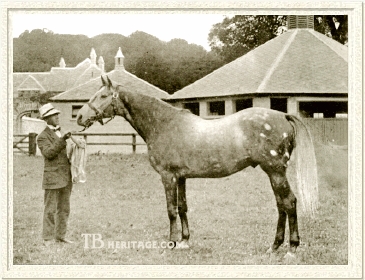
As a glutton for punishment, I find myself drawn regularly to all things horse. Of late, I have been looking at web sites that talk about stable and training facilities and what they are like. One of the things I think we forget about stabling our equine friends is that the stable should be for their needs first and for our needs second. This does not mean that our wants and needs go unrecognized, just that we need to consider the horse first.
Let's start with some equine basics.
Horses are large prey animals which makes them fearful of any number of things. Equine sizes have also increased over the years and now an average size horse is 15 hands. For those of you new to horse measuring, a hand is equal to 4". That makes a 15 hand high horse almost 5' 5" tall at the wither which is the area where the neck and back join together. Most of these 15 h.h. animals will weigh in at about 1,000 pounds. Given those parameters, you can expect about 31 pounds of manure and 2.5 gallons of urine to be produced daily. Would you like the yearly amounts on those? Manure will be about 11,315 pounds and urine will be about 912.5 gallons. Something to consider if you are thinking about keeping horses at your home.
Not too long ago, a 10x10 stall would have been a fairly typical size. Some were even 8x10. Now I see more that are running 12x12. Why is this important for your ponies? Horses tend to be claustrophobic and from the horses perspective being cramped makes them nervous or edgy and that will be a challenge for you as the horse care provider. You will also want to consider how to determine a good size stall for your horses. A really general rule would be about 1.5 times the length of the horse from tip of nose to the tail. As you can probably guess, the longer the horse, the larger the stall. A horse that is 96-inches from nose to tail would need a 12x12 stall.
What happens with horses that are stabled in cramped, boring and stress producing environments? They develop bad habits. Cribbing or wind sucking is one of the most common behaviors that manifests in bored horses and can cause digestive issues. If you aren't familiar with cribbing, the horse will grab the edge of something with their teeth and suck in air. This air sucking releases endorphins that gives the horse a "high" which of course makes this an addictive behavior. Ask any horse care provider about this bad habit and how hard it is to break.
Another factor that many barn designers seem to overlook is the temperature range that horses feel comfortable in. This is called thermal inertia, and the horse's range is from 15 to 60 degrees Fahrenheit. What this means is within this temperature range the horse won't shiver from cold or sweat to dissipate heat. When compared to humans, this means that an 80-degree day that we find comfortable is really quite warm for the horse. If we were to look at the middle range, horses would be at 45-degrees. Recalling some of the best training times I had, they were in the 50 to 60 degree range.
Horses evolved in the dry northern climates (think arctic climates) and developed an efficient, but vulnerable breathing system. Have you ever spent time watering hay to reduce the dust floating through your barn or heard horses coughing when none were ill? Then you have the start for understanding the critical aspects of air quality and ventilation. Again, we need to be building barns for horses, not humans. Making a barn air tight for us causes horses to get wheezy, start coughing and become ill.
Proper ventilation is critical to your horse keeping. By the virtue of breathing, horses will add 2-5 gallons of moisture into the atmosphere every day. Now multiply that amount by the number of horses in the building and you can imagine the importance of moving that moisture through. Proper ventilation will eliminate condensation. The most effective and most cost effective method is passive ventilation. If the building is oriented to the prevailing (natural) wind direction, vented soffits and cupolas can keep the fresh air moving through. Those of us from colder climates often think of the luxury of heated barns. If you have a heated barn, be certain that you also have an air exchanger to pull out the old, stale air and bring in clean, healthy cool air.
No Foot, No Horse. Horses were meant to graze on the plains and move over the earth in their running and roaming lifestyle. This was a far better approach for their feet and legs than keeping them confined in stalls and paddocks, but this is how we keep them. As caregivers to the confined equine, we need to address the long periods of standing on hard surfaces and what that can do to feet and legs.
Another concern with the contained horse is eating near manure. This practice makes controlling internal parasites a huge concern and it is essential for the health of the individual horse as well as herd health. Worms are really adaptable and new product s are constantly being developed to try and stay ahead of the parasites as products become ineffective. For a different view on how destructive parasites can become, search parasites and goats/sheep and see how their wormers are now virtually useless.
Horses are grazing animals and as plant eaters (herbivores) and this should direct us to the best feeding practices. Horses naturally eat with their heads down so the nose naturally drains dust or other fine particulates out of their nasal passages. As people, we often hang hay bags or have hay bins located high off the floor. Again, easy for us, but not necessarily all that good for the horses. The dust ingested at this height is likely to go up the nose and into the lungs. This can cause problems like heaves to develop. Think about horse respiratory problems as something like asthma in people, a serious problem. Also, having hay located high can allow chaff to get into the horse's eyes which is irritating at the very least.
In a perfect world, horses could eat small amounts of food throughout the day rather than a big meal and then nothing. The diet of grass and hay is a good start and should be provided with clean, fresh water at all times. There are lots of studies out there on the proper way to feed horses, with strong opinions on all sides of the issue. Do your research and make your own determinations. If you really aren't certain what method(s) to use, going natural is always a safe bet.
Fight or Flight. Yes, that pretty much covers the horse. As prey animals, they are hard wired to run away as fast as possible and by whatever means possible. That explains a lot doesn't it. Horses, like most prey animals don't like surprises. They are flighty, reactive, spooky and their first response to almost everything is to run away. If running away isn't an option, horses will defend themselves by rearing, striking or kicking.
Since we know horses can and do kick, we should as caregivers make their homes from a substance that protects them as much as possible when they lash out in surprise or anger. Wood is the preferred material for stalls since it flexes, unlike concrete or masonry products. The wood may break, but is easily replaceable. The key, as with all things horse, is to provide a building that makes both humans and horses as comfortable and safe as possible.
Keep Them Safe. Horses are notorious for finding way to injure themselves in a stable environment. Have you looked in your stable recently? Have you eliminated all sharp edges? Horses will always find these edges and manage to hurt themselves. You will want to provide non-slip stall flooring that are not too smooth. Find sturdy, but forgiving, walls that will stand up to your horse's moments of innate flighty behavior.
Now look over the aisles. Are they wide enough for the horse and handler to walk safely together? Have you cleaned up all the excess items from the aisles? Wheelbarrows, buckets, equipment and anything else that finds it way into the aisle should be moved to their proper storage places. Is there a place to store tack and commonly used tools and equipment where they are out of the way?
Horses require some simple things to meet their needs.
- Adequate space for their size.
- Good ventilation and fresh air for their temperature preferences.
- Good company for their social nature.
- Footing that mimics the plains where they roamed.
- Access to proper food in the natural head down method. Fresh, clean water to wash down their food.
Links:



 Mahmoud (1936-1962)
 LeSancy
 The Tetrarch